Great

Fancy a Kerala houseboat as a vacation home?

Ever coasted down the backwaters of Kerala and lived the good life and wondered if you could own one of those beautiful houseboats as your...

Monday, August 28, 2006

Caught in a car crash

People are travelling more than ever these days. A holiday in the middle of the week can be enough for some people to jump at the idea of driving out of town to a nearby picnic spot, a waterfall, or take a trek into the woods.

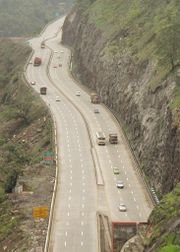
The Mumbai-Pune expressway has made it possible to go all the way to Pune in 2 hours, and what earlier used to take 4 hours. So people are whizzing up and down those smooth roads easily and more frequently. Here is a word of caution, yes, but not about overspeeding, but the repercussions of being in the right for a change, and still being victimized.

I know many people who drive in Mumbai, who must be tearing their hair out in frustration, every time they have to take their brand new car into the killing traffic. I must say, most Indians don’t drive with much respect for rules and road sense. (I’m Indian, so I know what I’m talking about and this isn’t a xenophobic statement). So, even if you are a good driver and you keep your distance and drive carefully, there’s going to be some moron somewhere, who will plan to kill you, or at the very least maim you.

On the open expressway, it is a real free for all. Cops are not around for miles and speed is genuinely any limit you chose to drive at. Also, poor driving sense is amply displayed on this stretch. So be careful. I’ve seen small cars like the Santro and Zen being so completely totaled, that they looked like they had been eaten by a machine and spat out. And of course, I shudder to think of the fate of people who got caught inside.
I’ve been in an accident on the Mumbai-Pune expressway and thankfully, my family and I came out alive, with my mum suffering mild scratches, where glass shards grazed her as the window splintered. My sister had a bruised rib, though she was sitting in the back, sandwiched between my mum and me. I wasn’t hurt at all, even though my brother had to swerve and almost climb over the road divider on my side, to avoid this state transport bus, that just pulled out in front of us, without signaling.

The bus rammed us and since we were going at 75 km an hour (for the uniniated, it is slow speed on the expressway), my brother had to get the car in control and so we stopped quite a bit away from the bus. The passengers of the bus had got out, but no one ventured near us. They were too busy tuned into the driver’s version of the story.

I remember telling them later that they didn’t have the decency to see whether we were alive or dead. The passengers stood around, gossiped and jumped to conclusions all in that 10 minutes it took us to recover from the shock of the collision and get out and walk back to the bus. Yes, another reason to be a careful driver is just this – people are not going to stop and help. They are more worried about the delay, than the accident. And because this bus was full of office-goers on the way home or to their shifts and who claimed to take the same bus every day, and knew the driver and conductor, they were even more convinced that we were at fault.

With people already prejudiced, you can’t expect them to help you and if you insist on asking for the bus driver’s licence number, you have another drama on your hands. The rule is that the driver can’t give you his licence number because he works for the state transport, and since the bus is the state’s property, the government is held liable for any damages that we seek and not the driver himself personally. How nice!

So now, not only is your car badly damaged, the crowd is getting inflamed because of the delay and also because you insist on the cops being present to file a report. On the expressway, a police station is usually 20-25 kms away, so tempers and frustrations are building. In the meanwhile, some of the bus’s passengers are bitching big time. Something like this: rich people-won’t take responsibility-show off contacts-delaying us-what do they think of themselves-our poor driver-poor us etc. I was honest enough to tell someone there, that one can expect small mentality from people like the driver, who probably doesn’t know better, but even some of the better-off passengers were displaying the typical narrow mindedness! This surely didn’t win me any admirers there, but the hell with it.

In such a situation you can’t win. But I still stand by my statement, that those passengers didn’t have any decency or manners. No one came over to see how damaged our car was or whether we were all okay or injured, until I made this comment. And this remark I made, did pinch a lot of the people there. Because, when two cops finally arrived almost four hours later (yes, we waited on the expressway for them with such a friendly crowd!), one man was furious. He told the cops, what did I mean by saying they didn’t have manners, is that the way to talk? Yes it is. You were there standing and watching the fun and when it began to pinch your conscience, you were forced to retaliate. This man also said something that, whether he realized it or not, showed off his class bias. I remember telling these people, that if this had been their own car, they wouldn’t be so quick to defend the driver.

This man later told the cops, that these people (ie. my family) think they are only ones who have driven or sat in a car; even I’ve driven a Mercedes. But that was just my point. You’ve ‘only driven’ a Mercedes, that belonged to someone else. Try owning one and then watch it getting mauled in an accident – there is a huge difference. Your anger would quickly be directed in the opposite direction, depending on, which vehicle your sitting in. Then, you would forget how many ‘best driver’ awards the bus driver had won.

There were many words exchanged in the heat of that moment. It was hugely stressful for us, and I admit that the bus’s passengers were delayed but this is a price you have to pay for being in accident - as if they didn’t know that. We would have to wait for the cops to file a statement, so that we could claim insurance, and it was too bad their driver was held up as result of it. After all, they were all standing up for him.

The passengers told us that the driver had just won the ‘best driver award’ from the state corporation and that he and the conductor really took care of the bus and the passengers. The conductor had installed a TV and VCR with his own money, so passengers had a good time. How nice, but did that really mean, he was right in ramming my car? None of the passengers, I spoke to could tell for sure what had happened, even the ones who had been looking out of their windows. Most said that they realised what had happened because of the noise of the crash!

When the cops came, they said that if we wanted to make a formal complaint, then the bus and our car would have to be taken back to their station and both the drivers would be given breath tests and then the vehicles would be checked for any mechanical faults and what speeds they were being driven at, and then statements would be taken down. Meanwhile, the bus and our car would be with them, so we would have to hire another car to go home and keep coming back, as and when the case progressed!

Do you realize how incredibly skewed the system is against the private vehicle owners? The conductor had called for a replacement bus but we had to call for a car, or just let this matter go. My dad called up a cop friend of his (that’s why it’s important to have contacts, something those passengers will learn, only when they are at the receiving end of this kind of unfairness), who told the cops at the scene, to file a statement there itself as a favour to him and that we won’t be pursuing the case, and that we needed the statement for claiming insurance, and that we won’t be holding the driver ‘personally’ accountable.

That’s how it really works – the law. The irony is that my father is a lawyer and he saw the nasty side of it for the first time in his 40 plus years of being in the profession.

By then, after 6 hours or so, the replacement bus had also arrived with a supervisor, who told us pretty much what the cops did and also told the cops that he wanted damages from us for the bus! So to get a statement written down on the site of the accident, we had to pay Rs 400 for the dent at the back of the bus.

And as if that wasn’t enough, the passengers also decided to test the waters and started yelling for “damages” for the time they had wasted there! Well, talk about man being a rational animal. Obviously, some people haven’t evolved that much. If there is way to milk other people’s misery, some people will find and use it.

It was the cops who calmed them down and told them to get into the bus as the matter had been resolved. Actually, if anything, it just shows how matters like these are never resolved. It left a very bitter taste in my mouth and I carried along a lot of unsaid comments for months after the accident, that I wanted to fling in those passengers’, cops, driver, conductor and supervisor’s faces.

I remember having the parting shot. I told the supervisor -- so this is why you guys kill for government jobs. Because you know you’ll never have to take responsibility for anything!

Written for www.dancewithshadows.com

Tuesday, August 15, 2006

How AIDS touched my life

This is a story of an innocent life shredded to pieces and it will make many angry, still many will feel sad, but most will feel helpless in the face of the big terror called AIDS. It’s an incurable scourge that invades your body and once there, your entire life becomes hostage to it.

You can put on a cheerful mask and walk around among healthy people, but like the living dead.

This is the story of one such person. Shobha was a bright, pretty, hardworking teenager who came to Bombay to work for us. She lived on my grandmother’s island (A Village by the Sea; Mangalore), and my mum brought her to Bombay so she could have a shot at a better life. Her family were one of my grandmum’s neighbours back in Mangalore and their home was a hop, skip and jump away. But that distance didn’t reduce the fact that there was a world of difference between them and us.

My grandmum was the daughter-in-law of a family that rented out boats for fishing and these people were the hired help. In a village, a family’s economic situation is not as starkly visible as in a city, where slums and mansions co-exist. Shobha’s family had food to eat, a house to live in but a lot of mouths needed to be fed, as is always the case.

So, my mum brought her away to Bombay in 1977 and a year later, she was expecting me. So, it seemed like a perfect arrangement – mum got a young maid for herself, a nanny for me and Shobha got a better home and a lot of food for herself. She was around 12-13 years old at that time.

But by the time, I was about a year old, she had left us for good and gone back to Mangalore, where her family said they were looking to get her married off. She went away – suspecting nothing.


Shobha hovers behind me in this picture, I was 8 months old.

What happened to her after she went back is a subject of constant whispers and rumours, even today almost 27 years later. The most popular being that she was sold into prostitution by her family. They acted as pimps for her. She serviced fishermen who could afford her, contractors and engineers who were sent to the village to lay down roads or water pipelines, rich businessmen who owned the fishing trawlers etc.

The result was three good-looking sons from different men, who fortunately for them, looked like Shobha, so even though tongues wagged constantly, finger pointing was kept to the minimum. Those kids were always hanging out with my cousins and me, whenever we were at our granny’s for the holidays. It didn’t matter to us, what their mother did for a living and who their fathers were. Those were such innocent days, playing and running around with a prostitute’s children without a care in the world!

We never discriminated between her kids and ourselves but she was always hovering in the background apologetically. It didn’t occur to me until I was much older, why I was refrained from going that – hop, skip and jump distance – to her house. She had a affection for me that she obviously didn’t have for the others because she had helped mum raise me for a while. So, there were treats for me like ripe mangoes plucked and brought over or even the raw ones, which I love to slice and eat with salt. She also bought and gave us fresh fish, which my granny would insist on paying for. But she always stopped short of entering the house itself, no matter how much I asked her to come in – she knew something that I didn’t – she wasn’t going to be tolerated inside the house by the adults, no matter how much the eldest granddaughter wanted it.

During my college years, my visits to Mangalore became infrequent and I finally went back last year, after almost 10 years. So, much had changed in my life. I was no longer the kid who pranced around my grandmum’s fields and cowshed. I was a boring adult with a job! So, much had changed in Mangalore – there was a bridge built (from the jetty on the other side to the island), finally piped water connections would be given to each home, my uncle had torn down the old house and built a modern bungalow.

But Shobha was the same, amazingly thin, despite three pregnancies and so much else her body must have suffered. She still had clear, smooth, wrinkle-free skin, that would cause envy here in the city. She was smiling as usual and also keeping her distance, as usual. But this time, my aunts muttered to me under their breath, that I should just say ‘hello’ to her that was about it. I asked why and they evaded some more, as if I was 10 years old rather than the 27 year old I was.

Then I told my aunts, that I would ask Shobha herself, how life was treating her and how her kids were doing now, and why my aunts were pretending like she was a ghost to be avoided, rather than a flesh and blood person. They were suitably shocked and knew I would do exactly that, So, out came the truth – Shobha had AIDS. It was just a matter of time.

Everyone in the village knew about it – Shobha was treated as was normally possible by people, who have little or no information about AIDS, but only know it’s incurable and is fatal. If there was a camp for God’s rejected souls, then she certainly would have been left there, by her heartless family. Her meals never really filled her stomach. I guess the ghastly logic that must have gone around in the minds of her family members, who destroyed her life must have been – she’s going to die anyway, so why not starve her slowly and gently. These people had lived off her earnings and her body for so long, and now she had become a liability to them.

The sad part was that since AIDS really has no cure and symptoms can only be controlled, and only for that long, her family knew that - care for Shobha or neglect her – either way no one will know the difference. I was so angry about it and I wanted to do something for her – even hand her some money as a last resort. I tried talking to my aunts about who was the doctor treating her and they said, they didn’t know, and they thought her family was not bothering about taking her to a doctor, in the first place.

But Shobha herself, didn’t seem to care anymore. She didn’t want me or anyone else to worry about her. She also kept a more than an unusual distance and never came around to granny’s house the entire time I was there. She didn’t want to talk to me about her condition, her family’s ruthlessness - she had just given up on herself. I went to live with an aunt on the last few days of my visit, and that’s when she sent over a basket of raw mangoes. It was a farewell present – and one that I will never forget.

I came back to Bombay and I heard from my relatives that things had gone from bad to worse for Shobha. A few months ago, she died of the disease mercilessly stalking her body.

Or rather, as rumours go, she may have been murdered by her family. The story goes that one night, her family just lifted her up from her bed (by then she was unable to walk) and took her down to the river and drowned her! The official story is that she committed suicide, something which the rest of the villagers don’t believe in.

I don’t either. Shobha had too much spirit, to disappear quietly into the night. She must have realized, that the disease exposed her family for what they had done to her like no amount of whispering and gossiping would have. She was a stinging, living reproach to them, and their greed. She just had to be done away with.

But she lives on for me, in my memories. This is a tribute to her flawless style – the acceptance of a horrible destiny that was not bequeathed to her by God, but by her fellow humans – who have a lot to answer for.

Monday, August 14, 2006

One billionaire's pudding is another's poison

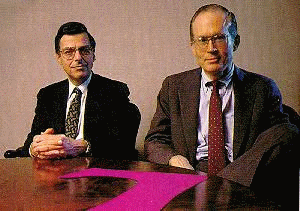
Managing Partner at TCI New Horizon Fund, Madhav Bhatkuly went to the London School of Economics, LSE, to beef up on the many theories that abound in the field of financial economics. But he was always intending to come back to India because something here had caught his interest. It was the way the stock market works - the intricacy and the mechanism and the beauty of it appealed to him.

Inspiration & motivation
But another source who lit the fire within him about the stock market was his best friend's father, who was then the Chairman of Citigroup. Bhatkuly told CNBC-TV18, "I had a close friend and his father used to be the chairman of Citigroup at that time and he used to lecture at the stock exchange, virtually after every budget. So I was chatting with his son one day and his father was preparing for the budget speech and I asked what is this? He said that I am going to talk about the stock market and the implication of the budget."

He recalled, "So I asked him what is the stock market and how does it really function? So he said if you want to be a part of a very big, successful and famous company but you don’t have the money to own it, and you want to own just a small part to be part of the story, then the stock market is the place to go. And actually, in many ways that was the defining moment. It first got me interested, that here was an opportunity to be a part of history or a part of success."

At the LSE, he majored in derivative products. The entire field was new back then so he didn't have many textbooks to study from except the one written by Fischer Black and Myron Scholes, which had come out just a few years before he graduated. So he was lucky enough to study original research. But when he got back to India, he realised that all those theories he studied were of little use. It was really experience that counted.

He began his career with ICICI, which was purely a project finance institution at that time. Madhav recalled, "I was busy going to greenfield project sites and doing spreadsheets and cash-flow analysis on Lotus (software). But it was an extraordinary experience. That gave me insight into corporate India and helped and shaped me as an analyst. I think that job really taught me or gave me the bridge between everything that I had learned in theory and the real world - of what drives earnings models and businesses and also to work with entrepreneurs, which I think has actually contributed to the process of investing today."

Investing principles
He doesn't believe that investors reach a magical circle of competence, as supposed by some. But investing is a process of trial and error, just like everything else. He said, "I think with experience and consistently just simply going out and doing the job, you begin to understand some things naturally better than somebody else."

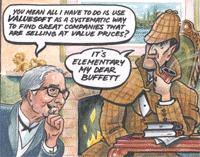
After all, even the billionaires of the world have not made their money following any one holy grail. Benjamin Graham has been quoted telling Warren Buffett, "Warren the money won’t make a damn difference to you and I, our wives might just live a little better!"


All the same, some of these successful investors have followed their own path to riches. Warren Buffett has never invested outside the US. On the other hand, Sir John Templeton wanted to go out and buy the entire Indonesian Stock Exchange, the very first time he felt bullish about Indonesia! George Soros keeps it simple - he buys when the price is not right and sells when it is - the very essence of stock market trading. So, each of these men are rolling in money but have all arrived at it, in their own individual style.

So which style does Madhav call his own? He explained, "If I have to identify myself with one particular approach, at heart I would call myself a value investor. But value can mean different things. Is it prospective value? Is it enduring value? Is it value based on history etc. I spent most of my early career or the last few years as well, in small cap stocks, where perhaps the market efficiencies were higher and maybe because they were illiquid or for whatever other reasons."

Evaluating businesses
He looks at different valuation methods for different businesses. For instance, if it’s utility, he may use the discounted cash-flow, DCF, method but for anything else, he might use a different concept.

He added, "But along with that, it was also important to understand leadership in the business in its entirety. And what I looked for primarily was whether there was hunger enough to inspire that CEO to want to make it into a bigger business. Also, was there a cogent strategy and more often than not if you meet a lot of business leaders, you will find that some of the best or the most successful leaders are very well put together in their thoughts."

Also managements which spend time in execution of strategic visions is what makes "the difference between a good idea and a successful one." Madhav also believes in getting his facts and figures cross-checked with the mid-level managements of companies.

He explained, "It is important to visit second and third-line managements across the company. To first of all understand whether you were receiving the same soundbytes as you would hear from the top. But more importantly, were there processes. Was there enough in terms of execution capability and deliverable action points built into the system itself."

According to him, Sun Pharmaceuticals and Godrej Consumer Products are two companies, which demonstrated his belief in executing strategies and that had processes in place for doing so.

Indian stories
Analysts need to be able to spot what's going to provide a margin of safety with regard to every stock their looking at. It could be prospective earnings or absolute assets. He spotted this safety point in the shares of Oriental Bank of Commerce, OBC, when it was in the red and was burdened wth NPAs that were not serviced.

He elaborated, 'We were the first foreign investors in OBC, at roughly about Rs 55 a share. It went through a terrible period as a result of which it had accumulated non-performing loans in excess if 9%. But two years prior to that, there was a change in leadership. There was a new leader who had cleaned the processes. So as a result of, which the company had begun to have a shift towards identification and greater disclosure.'

'We also found that interest rates in India had fallen so much, that OBC had 41% of it’s book in Indian government bonds or treasuries, and that the unrealized gains on the securities portfolio was greater than the market cap. This meant good news - that it could have wiped off the NPAs in one shot! So the margin of safety was very clearly visible.'

He found absolutely great value waiting to be unlocked in United Breweries. He reiterated, 'I think United Breweries is a very good example of startling value. The company went through two phases. One, when it was a consolidated entity and it had non-core assets including 40% holding in McDowell as well as huge real estate holdings. So there was huge value which could be harvested at some point of time.'

He added, 'If you look at or dissect the management of the business in two facets - corporate governance and market leadership. They have delivered dramatically on market leadership, I mean, here was a company which clearly knew what to do in the market place, Kingfisher made up 40% of the Indian beer market for several years and eventually went up to 50%. Kingfisher as a standalone brand was 27% of India’s beer market. So obviously the company knew what to do in the marketplace but it wasn’t translating that into profits.'

Spotted deals
Oriental Bank of Commerce
Godrej Consumer Products
Sun Pharmaceuticals
United Breweries

'When we first looked at just the beer business, we spent a lot of time figuring out what normalized earnings would be because the company had no profits. So what was the intrinsic worth of those profits? For that we looked at a company in Sri Lanka called Lion Beer, which was a Carlsberg’s joint venture in Sri Lanka. We were just trying to do a little bit of analysis in terms of the dynamics and what the costing was and we figured that the margin of safety was very large and there was an opportunity here.'

http://www.bufferstock.org/graham.htm

Written for www.moneycontrol.com

Tuesday, August 01, 2006

How the elephant can use the dragon

Fifteen years ago, when India was taking its first diffident steps towards economic unshackling, a full complement of analysts and strategists were ready with their growth prescriptions. A lot of water has flown under the bridge since then.

The question now is - has India lived up to its potential?

This question was put to three Harvard Business School professors - associate professor (administration) Das Narayandas, senior associate dean Krishna Palepu and chair, organisational behaviour Nitin Nohria.

Nitin Nohria told CNBC-TV18, "I think it's really remarkable to see that how much progress has been made over the last year. My sense is that the sea change that I see or the critical inflection point that I see is that, companies have moved from a defensive posture to now being in a genuinely aggressive posture in terms of global competition.

Until the last year, the sense was that Indian companies were really trying to fix their own businesses to compete domestically relative to the global competitor. I think now that they have developed the confidence that they can be successful, they are finally beginning to look outwards.

Like the Tata Group going out and buying Daewoo, it's just one example of how this more offensive posture in terms of what, at least we think, is a shift that we have see in the last year."

Krishna Palepu echoes Nohria, "I think that's a very important change that has taken place. The level of confidence (has grown) in risk-taking and in exploiting, not only the domestic market but global markets as well, and seeing growth opportunities as opposed to thinking in term of restructuring.

"The only contrast is the ambition level that Indian companies exhibit, (which) is modest compared to, for example, the ambition level that the Chinese companies are exhibiting. It's a first step but we still have a long way to go."

Chinese companies have been aggressive and have been gobbling up big chunks of the world's output of grains and metals, especially steel. So has India remained quivering, in the wings and just watching it all happen or are we participating?

Says Das Narayandas, "I think till a few years back or till last year, the dominant question was can we, in the face of everything that's happening, survive and manage in the domestic markets? This year, as I look around, I think it's (now) changed so we can."

This new found confidence has changed the equations considerably for many. Narayandas said, "If the first few things don't happen right, which will be the case if you are going to be more aggressive, then it shouldn't be that we immediately start to climb up and become self-doubting thomases.

"It is very important to have the resilience and the market should be willing to take a couple of hits but (should) support entrepreneurs, who do take the chances. So any mistakes will not be the entrepreneurs'. I mean they have to take chances and they will. It will be the markets (responsibility) and their patience and their willingness to stay with them."

Palepu adds, "Not only with the markets but the press actually because the press has to mature in analysing these things, that when you have moved industrial activity to a more risky path and more ambitious path, there will be mistakes that will be made, but that's a part of the learning process and people need to put that in perspective and educate the market.

"For example, if one of our pharmaceutical companies spends a lot of money on R&D, which doesn't work out, but that's R&D done, sometimes it doesn't work out. You can't just write it off saying that now this company doesn't know what it is doing."

He elaborates, "If one of the companies goes into acquisitions and has difficulty in integrating it, that's part of the learning process. So you need to have an overall perspective. But at the same time, that's not a license for being totally careless in the way you do things.

"But (my) interacting with Indian managers (shows that) they are pretty cautious actually. I think historically, they have been trained to be very cautious in the way they grow and manage things and so I don't worry as much about people making reckless moves, as much as, not having high enough ambitions, as a vision for the next 5-10 years."

Nohria commented on the changes in the business environment in India, "There are many companies (which) are examples of really major players that were non-entities ten years ago. I mean Bharti is a company that Krishna has studied and this was non-player ten years ago and it's a huge enterprise right now. Jet Airways is another example."

He explained, "If you look at what has just happened with deregulation. Over ten years, there are clearly some examples that have built really substantial companies in a domestic sense and then hopefully, some of these people will become global too. As we know, airlines are expanding or being given opportunities to go international. At least this is an opportunity for Jet Airways to become a major rival to British Airways in the London-Bombay route, which is the most profitable route. So there are clearly opportunities that are being created. There have been many more Indian companies (that) we now take for granted but they weren't there ten years ago."

About five years ago, China was where the MBA students seemed headed. This was an exciting, unexplored, fertile business turf. But with perceptions changing, a fast track route and a single window clearance being promised in India, China is losing its allure, or is it?

Says Nohria, "As we have been struggling with trying to clean our act, China has had its act in place. So, as we were in this mode, that was more defensive, they were in a mode that (was) relatively more offensive and so it got framed as India versus China debate.

"There is something inherently energising about a comparative debate. But I think there is probably a better way of framing it and I think Krishna has really framed this in a way that I find very compelling."

Palepu reiterates, "The other very important thought process we need to have is that, it's not just China, but China plus Hong Kong plus possibly, Taiwan because they have lot of business linkage.

"So, when you think about that and actually think about India and compare, the comparison really doesn't make sense because it's a agglomeration of three very different stages of development. Hong Kong is almost in an advanced kind of stage. Taiwan has been in the middle stage of development and then you have China. That's really the combination that you are looking at."

He explains, "So if you frame it as comparative issue, it's a lost cause in some sense because you are not just looking at China. We can say we (India) have an advanced financial system in the stock market but China doesn't have it. Not true, if you include Hong Kong stock exchange or you can say we have entrepreneurial companies but China doesn't have, not true if you include Taiwanese companies. So actually frame it as a total stuff, it's a more complicated issue."

Palepu adds, "But I think the opportunity here is to take advantage of the complementarities between the two countries. I think individual companies, to their credit, as opposed to observers like us, who might be thinking about a comparative race, are seeing these synergies.

"I think first of all, Indian IT companies are going and setting up shop in China to exploit markets from China into Japan or into Korea, where actually the language skills and the culture is more compatible. Indian pharmaceutical companies are going into China and trying to exploit the domestic market there."

Palepu suggests synergy can be achieved in other sectors, apart from IT. He says, "Take Tata Motors and Indica. There is a niche in China, that is very similar to the niche that Tata Motors has been able to hit so well and there are a large number of consumers in China, looking for a product like that (Indica), which they don't have because all multinational car companies roll out their own traditional stuff and therefore an opportunity is there."

"Other areas could be hotels because of the explosive growth in the Chinese economy, so business travel is increasing. I can think of many areas where Indian companies can go there and given the skill that we have, the market is somewhat similar, in many ways and slightly ahead of us. Open your mind (to Chinese competition) and not see them as rivals but as a business opportunity (that can be) taken advantage of and for collaborating."

Krishna Palepu's Case study: Where India scores

A Taiwanese hardware company called Inventek, that has major operations in China has a billion dollar plant in China, that produces notebook computers and is a very sophisticated operation. (They crank out a notebook computer in 15 seconds.) But the one thing that the CEO was telling me is that despite their being very sophisticated and an extremely productive operation, they don't make much money, and the reason is that there is lot of competition for this kind of contract manufacturing, and China makes it very easy with all the infrastructure being available.

Inventek's CEO admires Indian software companies, which serve the same customer that he serves, but they are making a lot of money. Inventek started 20 years before the Indian software companies did and they actually have more advanced technology but don't make any money. The software companies from India, who started 10-15 years later, are able to make lot of money. So how does India do it?

The CEO came to India on a mission to learn and to find out how to serve customers and make money. Now, Inventek is considering setting up a software facility in India and when Palepu asked him, "why do you want to set up in India?" He said, "If you really want to learn how to build a big software business, you have got to go to India." So they are considering setting up an operation in Hyderabad but in a way that is synergistic with their hardware operation but (plan) to build more value-added components using Indian talent.

Written for www.moneycontrol.com

Monday, July 31, 2006

How I got my mobile back

One doesn’t realize how valuable something is until it is lost. In my case, I realized this about my mobile phone - the C100- when I lost it in a cab in October last year. After it happened, I acted swiftly – got my SIM card blocked so the person who found my phone wouldn’t misuse it. What I didn’t do was – I didn’t file a complaint with the police. But then who does, these days?

Everyone knows, your cellphone is as good as irretrievably lost once you misplaced it or have been robbed of it. And the police are not of much use in finding it, which is why they told me I was very lucky to have got mine back at all!

Apparently, two men spotted it lying on the road, not far from where I had got down from the cab and had taken it to the Dadar police station because one of the guys claimed it was his. The other guy said he didn’t think so, and took the phone to the police. The guy who claimed it was his, was a chartered accountant and the really honest man was a BEST supervisor! So much for stereotypes.

Anyway, it took the cops a month to track me down. Well, I’m grateful they found me eventually but with my Dad’s number in my address book - very clearly mentioning ‘DAD’ - they could have found me sooner, couldn’t they? But the actual running around began only once they contatced him.

The cops had recorded the phone as an “unknown person’s property" in their diary and now wanted me to “claim” it back from them. So after verifying me as the owner, they wanted me to prove to them, that I really owned the phone and that it just didn’t have my SIM card inside it! I know it sounds so ludicrous but that’s how the police system works. At some point, I thought they were making rules on the spur of the moment, just to harass the hell out of me. But no - apparently, it is required of owners of cellphones to hang on to their bills for dear life or at least jot down the IMEI number of the handset somewhere, so you can prove to the cops that the handset does, in fact, belong to you. The IMEI number is found where the SIM card is inserted.

You have the benefit of this information -- I didn’t -- and that led to me being called repeatedly to the police station and that’s apart from the phone calls I made to have the phone released. I had to call my dealer who sold me the phone over two and a half years ago, and who didn’t keep bills that old. And obviously, he had not kept IMEI numbers of all the handsets he sold.

The cops wanted him to give the IMEI number on his letterhead, but my dealer couldn’t help. Then, a constable told me to forget about the phone but take SIM card, if I wanted it because I could prove the SIM belonged to me, with the help of a copy of a BPL bill.

So that took another round of phone calls. Then I admit, I got my dad to pull some strings and he spoke to the ACP of Dadar police station, who said the matter was a minor one and that he would tell them to release the phone, since for all practical purposes, I was the rightful owner of the phone.

He did say that since, a case ‘diary’ was made, it was a matter of routine that they had to ask for all that paperwork or else they could have just handed over the phone to me, once they tracked me down. So guys, if you’ve lost your phone, for once you’ll wish the cops are not as “thorough” as this!

My dealer also gave me the same bit of news, so I was slightly relieved to know it was standard procedure being followed and not harassment. Anyway, even after the ACP’s help, the phone was handed over to me two days after I gave in a formal statement/application, stating on which day, I had lost the phone, where I had lost it, colour/model/cellphone number etc.

So in all, it took me four trips to the police station in a week and twice as many phone calls to recover what was genuinely mine.

Like I said, I’m glad to have got my phone back but all the time I was running around to get back the phone from the police, I kept wishing that the people who had originally found it, had thought to get in touch with me rather than hand it over to the cops.

It would have saved me a world of trouble and of course the suppressed rage, that goes along with playing according to the rules – cops' rules – valid, but foolish nonetheless!

Safety steps
1. Keep the phone’s bill safely or jot the IMEI number down.
2. Remember the exact day you lost the phone. Don’t be vague about this because it helps prove the phone is yours
3. Pull strings if you can. Then hand in a statement like mentioned earlier.
4. Keep calling till they ask you to come and collect the phone from them. It’s just a phone to them, they have rapes and murders to take care of. It’s more important to you than to them.
5. If you find a lost cellphone, try and trace the owners and expect a justified reward, rather than taking it to the cops.

Written for www.dancewithshadows.com

Make work a fun place & you'll profit from it!

Kevin Freiberg, the acclaimed author of Nuts and Guts has been giving us some breathtaking insights into contemporary management practices and in the last part of the series, he speaks about how a leader can inspire those who follow him, to be better than him.

He says it is important to get to the heart of what motivates people and he believes this is across cultures and not specific to the US, Europe Japan or South East Asia. He explains how Southwest Airlines is empowering its employees to be more than just drones working for an airline company. They take it as a personal cause to make sure their flights are on time and tickets are reasonably priced, so that grandparents can travel to meet family or just for fun, without it becoming to expensive for them.

Peter Drucker did say that the "leader of the past was a person who knew how to tell and the leader of the future will be the person who knows how to ask." Freiberg believes this is true. He told CNBC-TV18, "It maybe hidden in some and I think the way we awaken that in people, is to give them a voice. So, you got to give the people freedom, to think and act like owners of the business and secondly, you have got to equip them to think and act like owners of the business."

"Now when I talk about ownership, I am not talking about the stock options and profit sharing, I think those things are critical but I am talking about the mentality which says if I see a problem I will own it. And really, when you think about ownership, ownership is about finding the gaps in any business and stepping into the breach to fill in those gaps, whether it's with a customer or whether it's with a co-worker."

The quiet heroism of 9/11
"Mid morning, on 9/11, the air traffic control system in the Federal Aviation Administration, FAA, had shut the air traffic control system down. Southwest Airlines had accounted for all of its 350 plus aircraft except for one. It's mid morning on 9/11, you cannot find a plane, so what do you think? It may have been hijacked. But fortunately, the plane had diverted to Grand Rapids, Michigan where Southwest Airlines doesn't have a presence. They got down on the ground, the ground staff plugged into the airplane and said we are so thankful you are down, you are one of the last aircraft and the system is down.

"On the parking lot, they had 40 aircraft waiting and they were told, it's going to be five hours before we can take your passengers off the plane and the pilot looked out the cockpit window and said there is an empty belt loader over there, that's isn't being used. So he asked the airport's staff to get it to the plane's front door. They brought the belt loader to the front door, the pilots and the flight attendants gingerly escorted all 137 passengers down the belt ladder."

"Then the pilot called the rental car agency and said can we use your shuttles to get out passengers to Amtrak (which is America's train system). The flight attendants and pilots swiped their own credit card to buy tickets for the passengers, who couldn't afford it and within 48 hours of that incident, everyone of those passengers were in their homes with their loved ones."

This is one committed team that made that scary day, a little more comfortable for the people who flew their airline. People who loved doing their jobs so much ,that they found a way for their customers to be satisfied.

Leadership counts
He believes that if people are failing to find joy in their jobs, then it has to do with "one of two reasons, either you are not a good coach or they are in the wrong job - they are not in the sweet spot, where there is a fit. Where is the responsibility? On you - the leader. Who assumes ownership? You, the leader, because when you really think about it, leadership is about serving."

"I mean the only reason to be in leadership is because you think you have the capability to serve other people and the great leader is always the one who looks in the mirror first and says what about me needs to change. So if you have somebody who is not creating, I think you've got to look in the mirror and say what are we doing to create an environment that drives the best out of this individual."

At the end of the day, it's always a people business. And, people are the most complex thing you lead and you manage. At the end of day, the great leaders are the people who understand that if you can get people caught up in a cause, that's worthy of everything that they have got, that makes some feel heroic about what they do. At the end of the day, people want to come and be a part of something special."

Written for www.moneycontrol.com

Saturday, July 29, 2006

Mark Mobius: Godfather of emerging markets

He is considered 'the Guru' to emulate, when spotting emerging markets and everyone wants to know how Templeton Emerging Markets Fund picks stocks to invest in. Looking up to him and learning from him is what most rookie analysts and investment bankers do. That's Mark Mobius for you - the Godfather of investing in emerging economies.

Mark Mobius is the son of a German father and a Puerto Rican mother and he says that he had exposure to very different cultures, which really helped him. One of his brothers, Schroeder, thought he would be a pianist because as Mark told CNBC-TV18, "My parents really forced us into music, in my case the piano and my brothers - the cello and the violin. Ofcourse, I still love the piano but I don't have much chance to play."

He also loved theatre and films and got his undergraduation degree in Fine Arts. From here he moved to psychology and from there he moved onto economics. Then it was consumer behaviour which grabbed his attention - which was a amalgamation of economics and psychology. He explains, "I did a lot of work on consumer surveys with international research associations." So, he studied social psychology and also briefly did clinical psychology from the University of New Mexico.

Interestingly, Mark was intrigued by stocks when he did his PhD thesis on communication satellites! It was around the time that President Kennedy was in office (early 1960s) and there were decisions to be made about whether Americans needed to stick with AT&T or whether something independent would be done.

The Kennedy administration and the Congress decided to do things independently and started the Comsat Corporation. It was listed on the NYSE and Mark invested in the stock after doing his research. It goes without saying that he made a lot of money. So, that's how the story of Mark Mobius's stint with investing began.

Also at the point, Japan was a sort of emerging market and he began to take an interest in it. But otherwise, 'emerging markets' were not words that had yet been coined back then in the 1970s. It was when the IFC and the World Bank decided to fund development in the underdeveloped countries, that the term 'emerging markets' came up.

Mark says that Sir John Templeton had the sense to invest in such markets before anyone else thought of doing so. He was in Mexico and Japan before the others and he "had the ability to condense things in a very nice way. He was able to summarise a idea very nicely and he said, 'If you want to get the best bargains, you've got to look globally'." So Templeton was really the real reason for the existence of the Toyotas and the Datsuns of the world.

The big charm of these new markets were, as Mark recalls, "The stocks and the P/Es were cheap. There were a lot of undiscovered companies and no one ever believed that Japan would be where they are today."

In all this time, Mark Mobius still didn't know whether he wanted to be in the business of stocks. He worked with Monsanto and wrote a book called 'Trading with China' and also was eager to see the world, especially Asia. So he went to Japan, Korea, Thailand and Taiwan, mostly on work. It was in Taiwan, where he was on the board of the International Investment Trust, and after a board member who was running the trust left, Mark took over. So, that's when he got his first taste of investing and managing a portfolio.

So despite Wall Street's siren call, Mark Mobius continued with his exploration of the Asian markets and was well positioned to take advantage, when globally, emerging markets in Latin America and Eastern Europe were opened to the world.

So in 1987, Mark Mobius was handpicked by Sir John Templeton to head Templeton Emerging Markets and till date, Mark is unaware of why he was picked! He hazards a guess though and says, "The fact that I was out here (in Asia) and seemed to be knowledgeable about what was happening in Asia and was enthusiastic about it."

They started out with $100 million and with only one analyst and himself as the only 'team' in place! The only countries, he could invest in, in those days were six in all - five in Asia and one in Latin America. Today, the statistical projections he made in his book on China, seems like one of Nostradamus's predictions but back in the 1970s, he wasn't believed at all!

While investing in stocks in emerging markets, he uses the same system that Sir Templeton used. He explains, "His belief was that you got to pick stocks that in five years, according to your projections, will be inexpensive." Mark does his homework as well. He looks at profit & loss statements, cashflows, balancesheets in detail and visits factories. Corporate governance is also a big issue he looks at.

Today, Mark Mobius is sitting on an incredible emerging markets database. Templeton analysts can access data from the Oracle based system that has now been installed and share information with one another, across the world. He elaborates, "We started out with a list of 17,000 companies and we sifted through that. Now we have 900 companies in our database." But they are constantly adding to this "action list" and subtracting from it.

The criteria used to eliminate companies were size, liquidity, other problems like remittances out of the country or poor corporate governance norms, were also taken into account. Currencies are also evaluated with relation to the dollar or the euro and then the impact on a company is studied. So an undervalued local currency will help exporting companies, which makes their stocks attractive.

When it comes to the stocks of the 900 companies that are on his database, they keep their eyes on the ball, at all times. Mark Mobius elaborates, "We have a target buying price and a target selling price." He cites a study that Templeton did, where it seemed they were leaving stocks a little too early, so now they keep moving the limit up with a moving stop loss.

So, how does a Templeton analyst make a stock pick? He analyses a stock, then it is reviewed by a peer team of six people, which also includes the sector expert. They agree among themselves on buy and sell limits. If there is a disagreement, then Mark steps in. Otherwise, the process moves on and a team of allocators comes in and allocates these stocks into the portfolios.

At the end of the day, though, Mark says that "You should stick to your convictions if you have done your research. Process is key and you should stick to your stocks, otherwise, you are really in trouble."

Written for www.moneycontrol.com

Friday, July 28, 2006

Engage in active experimentation: Wind

A changing environment is important to continuously experiment as sticking with the same thing will not be beneficial in the long run. Professor of Marketing, Wharton School, Yoram Jerry Wind told CNBC-TV18, "We have to experiment whether it is a planned experiment like it is in the sciences, whether it is an adaptive experiment, where we plan continuously to experiment or we learn from natural experiments, what's happening around us. But it is critical due to the changing environment that we continuously engage in active experimentation."

He explains, "Today's environment is different than yesterday's and I think every firm faces changes in consumer behaviour, changes in technology, changes in government regulation, changes in competitive activities and just to continue what they have been doing, relying on their own mental model will not allow them to succeed. So what they have to do is, they have to when dealing with natural experiments, observe what is happening around them and then say - 'How can I learn from this?"

"For example, the US army used to have a videogame for recruiting. Suddenly someone realized that there have been 10's of millions of games that have been played and said - why don't we analyze what all these recruits did in terms of the game and they got enormous amounts of insight into strategy - into what works, what doesn’t work based on mining this enormous amount of data."

"So the idea here is - not that always you have to design your own experiments, but in the natural experiments area you have to be open to the idea that if I have some opportunity for learning, what can I learn from the failure of the companies? What can I learn from the collapse of the dotcom bubble?"

"So the idea is - 'How can I continuously learn? Adaptive experimentation is critical. If I go with a single strategy, at the end of the year, I really don't know what I should do next because I don't know whether to stay with the same strategy, improve it, change it? I have not learnt much, but if I design my own strategy, it is an experiment. I am trying three different things in three different places. I can tell them, which of them works better and then I can modify my next year's strategy. I learn something during the year and that is the key'."

CEO of ITC's Agribusiness, S Sivakumar agrees with Wind. He said, "Unless you look at things very differently. If you continue doing things the same old way, there can be a whole lot of inefficiency in the way you are doing things. The basic reason to start something new could be reaction - it could be many other things also. But the very way you look at it differently means that it is not reactive thinking."

"For example in e-choupal, we were the buyer of commodities. If you have to reduce cost or improve quality, all that you could do, (if we were thinking in the old way) was appoint commission agents in the mandis who are better skilled or cut the transaction cost a little bit by improving transportation costs. But nobody really though for decades altogether that transactions outside of this market ever existed. If a farmer was very small, he had to go to the market, he had to sell because that is the only economic way of doing things. That was the traditional way of thinking. But when e-choupal started, we said - 'think of it very differently'."

When e-choupals was a mere thought in his mind, Sivakumar decided to go into uncharted waters. 'At one level, obviously when you say, I want to put internet in the village and the farmer will look at it and transact, and obviously the first reaction is - ok, can a farmer actually access the internet and we remember in 2000, even in urban India, telecom did not fully take shape.' Chairman, ITC, YC Deveshwar initially wanted to do a pilot but the moment it made enormous sense to him, he sanctioned Rs 10 crore to plunge right in and get the concept working.

Wind applauds the idea and says, 'I think what they have done is the right approach, especially when you are grappling with a radical idea. When you want to educate the people and tell them what it is, there was no way they could implement this unless they educate the farmers and his own people. But this is a perfect example of the importance of experimentation. Had he not experimented with this, he still would have been in the old trading business.' It also helped that the management was an enlightened one and they were able to carry the experiment to a successful fruition.

Next up was convincing the farmers to engage with the new model and learn to use a computer for information. Until then, farmers took their produce to mandis and there the agents would weigh the produce and then pay them. This method has endured for years but farmers were frequently cheated. Sivakumar elaborated, 'So proof of actual execution was always sought for and pestered for by the villagers until someone said, 'Here is someone who is doing it right, let's now adapt to it'. So this infrastructure was put into place to deliver information independent of transactions, so that agricultural commodity buying became more efficient.'

'We did realize that some fundamental issues of rural India are, fragmented farmers disbursed across 600,000 villages as well as the weak infrastructure. So we realised that the e-choupal system could be used for taking other goods and services back into the village, whether you are bundling information or knowledge together with transaction or you are separating it from transaction. So today, ITC's consumer goods are going back into villages, but a whole lot of other companies whether it is agricultural inputs, farm equipment, consumer goods, consumer durables, financial products are all going back into the villages, using the same infrastructure.'

He added, 'This also changes its own paradigm, in the sense that, when you looked at selling consumer goods to low income consumers, earlier the concern was, 'how do I cut costs, how do I cut the size of the pack so that I am able to give them value at that price and so on'. But the e-choupal also put more money in their (farmers) pocket so that they were able to spend more and improve the quality of their life. This has created a virtual cycle.' What's more, now other companies have begun to use the network and the system ITC has put in place, to supply goods into the village and not just to buy goods from the village.

As Wind puts it succintly, 'Change your thinking and you can transform your work and your life.'

Written for www.moneycontrol.com

Thursday, July 27, 2006

Maxim to stop men from moaning

Men have been moaning about not having anything worthwhile to read for a while now. Well, there are newspapers and newsmagazines, but that's not what they mean, do they? They mean stuff like Cosmopolitan and Elle. The glossy, catty magazines that give women advice on everything and more.

Men now have Maxim and the Indian edition is being edited by Sunil Mahra. This magazine has succeeded in tantalising generations of men abroad and now Indians will get their fill of gorgeous women and hot tips to woo them correctly and more importantly, keep them happy!

Ofcourse, women stand to gain in all this. If only Maxim is made mandatory reading for all men. But wishful thinking apart, the magazine is packed with entertainment, news, gossip, and yes, sex. Very candid Q&As on sex should have men fighting, to get their hands on this magazine.

One person, apart from Mahra, who has made this possible is 35-year-old Piyush Sharma. He is a science graduate with an MBA and now the CEO, of the newly launched men's magazine. Piyush's tryst with publishing happened by accident. He gave FMCG, IT, and the service industry a shot, before moving to Tehelka, where he was Vice President, in-charge of marketing for two years.

Having got a feel of the publishing business, he decided to be daringly different and brought UK's best selling men's magazine Maxim to India in 2006. Think global and act local, that's Piyush's editorial mantra. In fact, before the launch he spent one week in the UK, to understand what Maxim was all about. They also conducted a six-city survey, to understand what Indian men really want. The magazine relies heavily on Indian content, but about 30% is international news.

Barely two editions old, Maxim already has big boys like Samsung, Ford, Rayban, Hyundai, Toyota, Airtel and Nokia buying space. Being a men's magazine, Maxim has its priorities right. So there's plenty of glamorous women, gizmos, sports, funnies and fashion.

Its first edition was a complete sellout, with 75,000 copies being sold. Enthused by the response, Piyush is now planning to launch a product in the travel as well as the women's magazine space. Big plans, big ideas and a maxim to be a market leader, that's Piyush Sharma for you.

If despite all this PR, you need still more convincing to pick up a copy of this magazine, then check out their website. They are running a contest, where they are requesting people to send in the 'best' photos of women in their bedrooms. And yes, the good ones are being put online and the best one wins a prize.

This sure will give everyone, a reason to start clicking those naughty bedroom pictures! Man, won't you guys kill to be on Maxim's editorial staff - just imagine what is 'not' being published, out of concern for Indian values (and hypocrisy).

For more on Maxim: http://www.maximonline.com

Written for www.moneycontrol.com

Pointers to buy a laptop & camera

Are you thinking of buying a laptop or a camera anytime soon? Then you want to get the best advice and not succumb to smooth sales talk and then walk out with something, you'll later regret buying. Everyone will tell you some great things about performance, where branded laptops or cameras are concerned. But that really is the last thing one should keep in mind.

A bigger priority should be the features that come with a laptop. For instance, things like the life of the battery. Any laptop one is thinking of buying should have a battery that has five hours of life in it.

Second thing to look out for is build quality. This will stand the buyer in good stead when travelling. Look at the hinges and taking out the drive trays would be a good idea. It will help to determine how loose or tight it is.

Thirdly, wireless connectivity is important and it has to be there in a laptop. There is just no compromising on this.

Lastly, buy something light and not a heavy model. Keeping this in mind, look at buying something weighing between 1-1.5 kgs and you will be good to go.

Recommended buys
ASUS M5A costs Rs 60,000, weighs 1.5 kgs, 2.5 cms thin, battery lasts for 7 hours and comes with a sturdy alloy cover.

Acer Ferrari 4000 costs Rs 1,00,000 plus taxes, 64 bit AMD processor and everything else is state of the art.

Fujitsu lightbook E40 tablet PC costs Rs 1,15,000, has all the gizmos and software including handwriting recognition and weighs under 2 kgs.

Editor of Chip magazine, Marco D'Souza told CNBC-TV18, "Laptops can be really cheap and as low as Rs 35,000 today. But they tend to scrounge on the build quality. The built should be good, it should feel sturdy. Also make sure, you have the operating system, OS, installed on the laptop because most people leave that out and expect you to install a pirated version."

Budget buys
Lenovo Thinkpad EQ3 costs Rs 40,000 including taxes, great security features including a airbag like hard disc lock for nasty falls and comes with Windows XP.

Compaq Presario M22O2DU costs Rs 33,000 including taxes, Linus OS, built-in speakers.

Candid camera Megapixels is not everything when it comes to buying a camera. But if you plan to print your family album, then buy a camera that is atleast 4 megapixels or more. Actually 8 or 9 megapixels is far too high and not required for family pictures.

Look at the optics of the camera, the lens should be really big and if one wants the zoom function, then it should have optical zoom and not digital zoom.

Budget buys
AIPTEK Pocketcam 4000 does not come with optical zoom but is a 4 megapixel camera and is priced at Rs 5,000. Kodak Easyshare V530 priced at less than Rs 16,000 and has a VX optical zoom, 5 megapixels, super speed and a great flash. There's no viewfinder and the LCD is a bit small.

Written for www.moneycontrol.com

Tuesday, July 25, 2006

She made Playboy rock & roll!

She once told Malcolm Forbes that "you may be publishing the capitalist tool but I publish the capitalist carrot, as it makes it, worth all that hard work!" The lady who made this comment unapologetically is Playboy Enterprises Inc founder Hugh Hefner's daughter, Christie Hefner, who wanted to be a lawyer or a journalist when she grew up, and never thought she would be working at Playboy.

But today she confidently says, "I think we are going to be the pre-eminent entertainment brand for grownups, the way Disney is the pre-eminent brand for kids, says the CEO of Playboy Enterprises, Christy Hefner. So, when she never thought she would be working at Playboy neither did her father think she would be there too. He has a memory though, of her standing by a typewriter in his office, when he was putting out the first issue of the magazine in 1953 - so that should have been a sign of things to come!

Hugh Hefner's intentions were never naughty, or so he says! He says, he always wanted to put out a classy,lifestyle and entertainment magazine for men and he succeeded beyond his imagination. His first issue sold 50,000 copies and within seven years, his circulation had reached the 1 million mark. Today, it sells seven million copies.

So, Hefner had arrived at 27 with his first issue, which he put together on his kitchen table and after having mortgaged his furniture twice. He also did something else with his first issue - he put the reigning sex symbol, Marilyn Monroe on the cover and didn't put a date on the cover, so newsagents would sell more copies of it, rather than send it back as they would have, after the sell-by date was over. This was street smarts of the best kind!

After winning over a conservative 1950s audience, Hugh Hefner worked his charm on his daughter to see, if he could lure her to work at Playboy. Editor-in-Chief & Founder of Playboy, Hugh Hefner says, "What she did when she joined the company was kind of move from one division to another and learn the business." And learn she did. She quickly gave up her plans for going to law school and this where she has been ever since. Today, she has made it $50 million company.

Chairman & CEO, Christie Hefner told Ingrid Vanderveldt's show American Made, shown on CNBC channel, "If I had made some of those big decisions that some big companies make which don't work out, we wouldn't be here. So, that's the hardest part, that we pretty much had to get everything right." But she was also aware that people would not give her credit for her accomplishments and would say she achieved it because she was Hugh Hefner's daughter.

But both father and daughter have seen their company through tough political times, like the Reagan era - of "political correctness and a very difficult time for Playboy." Hugh Hefner recalls, "I held the people who were running the business end of the company then, responsible for it and morale was low." On hindsight, Christie feels her father did not want to be heading a public company but "wound up inheriting a complicated business to run, when what he started off with was, a vision for a great magazine."

"There are to kinds of CEOs - those who make decisions and those who make speeches" -this was what a Playboy magazine article on business leaders said, and Christie obviously prefers to be the one who makes the decisions and she had to make some tough ones to pull her father's company out of the red. Hugh acknowledges this and says, "She was there to save my ass!"

The uncontrolled expansion needed to be curbed because Playboy was in various other businesses as well, like book publishing, had a book club, a movie business, a record company, a TV business, casinos, hotels, clubs, a modelling agency, a limousine agency and the Playboy merchandise. So, Christie took charge and told the head of finance that, they would manage the businesses with cash, divest businesses they couldn't turn around and allow business units to make decisions on corporate expenses. After this, came the fun part to figure out, how to grow the company.

That's when cable TV was exploited and the Playboy Channel was launched - which India is a long way away from getting in its bedrooms - because the company decided to "refocus on communications, which Playboy does well." Interestingly, this was something her father had also explored with two adult variety shows called 'After Dark' and 'Playboy's Penthouse' years earlier with top Hollywood stars like Sammy Davis Jr performing in them.

She and her father did disagree on whether or not they needed to shut down the Playboy clubs - which they later did along with the hotels. Christie says, she sees a certain beauty in the phrase "rationalising the lines of business", which see aptly paraphrases as "dumping the losers!"

Christie and her father had made another bold move. He had made his daughter the President of a company that was perceived as a "male chauvnist citadel", and she was one of the very few women in a top position of a NYSE listed company and that set tongues wagging. Back then, Christie had gone on record to say, "I had considered wearing nightgowns to work but thought that it would be distracting, so I opted for business clothes!" She was a novelty then. Today, ofcourse, there are many women in top positions and even the consumer profile of Playboy has changed. More women buy Playboy merchandise and more couples watch the Playboy channel - so it no longer remains a man's preserve.

She says, "I feel like I'm a steward for an extraordinary brand and an extraordinary set of assets. She also says that Playboy sells sexy and not sex per se because the magazine is a platform for romantic sexiness, even when there is lot of blatantly hardcore sexual content available out there - namely the internet. And she feels Playboy retains its marketshare because it provides a level of sophistication and style.

The reason that Playboy has been such a wild success in America, despite feminist and political protests, is because of the culture of freedom and the First Amendment. As Christie puts it, "No other company embodies the right to speak their mind, and has fought for that right, than Playboy."

Playboy: The Brand
Playboy licenses its trademark bunny for the worldwide manufacture and sale of its merchandise, which brings in half-a-billion in sales earnings. She obviously, does not want to lose control over such a valuable brand, so she remains a active marketing partner. She explains, "We have a top flight staff of designers who produce a style book every season with the colours, trends and uses fo all the Playboy iconography - whether that's the rabbit head or the Playboy playmate."

With the internet making Playboy images easily accessible, the brand is moving into the $10 billion gaming industry, with the adult game called Playboy The Mansion, where you get to play, party and make out with scantily clad bunnies, in a slick simulation of what really happens at Hugh Hefner's parties! Christie says, such multimedia platforms are great earning models for her company. Playboy also offers video clips on mobiles and saucy Playboy ringtones - basically women's dulcet voices urging you to answer your phone!

Today, Playboy has 25,000 retail stores globally and the magazine is produced in 20 countries and has a 50 million strong readership globally. All this plus Playboy Entertainment, manages 142 million cable and satellite feeds and operates 25 networks in more than 72 countries.

The founder of this empire, Hugh Hefner has some parting words of wisdom, "You are only here for a very short time and one should make the most of it - both in work and play. In a free society, if you are not free in the bedroom, then you are not free at all!"


Written for www.moneycontrol.com

Thursday, July 20, 2006

Here's what women want from their careers

India has a uniquely dual attitude to women - on the one hand, Godesses like Lakshmi, Durga, Saraswati are venerated and yet, well into the 21st century, baby girls continue to be killed. Newspaper reports have pegged the figure as high as 10 million female foetuses, that have been aborted.

Among the women who are fortunate enough to be kept alive, fed, clothed and educated, there seems to be a burning desire to break new ground - almost as if making up for their fellow sisters, who never made it. In fact, research shows that Indian women are more career focused than their peers in Europe and the US.

The Shell Group recently surveyed 12,000 students and young professionals in 12 markets around the globe, including India, to gain a better understanding of the factors that candidates consider important, when making decisions about their prospective careers. The study found that although there are many similarities in what male and female candidates look for in a potential employer - there are still many significant differences.

Here is what the study highlighted about Indian women. According to the research, when it comes to career goals, Indian women are more career focused than their peers in Europe and the US. While in the US, 51% of women are more interested in keeping a balance between their personal life and career. They are also less interested in developing new products as compared to 41% of the men.

In India, the differences between men and women are small. When it comes to choosing the industry, 25% of the female respondents said that they prefer working in the automotive industry and 22% in aerospace as compared to 2% in consumer electronics, 6% in consumer goods, 5% in hotel restaurant, 5% in tourism, 18% in IT/telecommunications, 6% in management consulting and 4% in the oil and energy sectors and 0% in healthcare.

Meanwhile, Indian men are more interested in working in IT/telecommunications (25%), banking (22%), engineering and manufacturing (21%), engineering consulting and aerospace (20%), accounting/auditing, environmental conservation and government service (16%). Like their women, only 0% wanted to work in healthcare.

On the subject of what men perceived to be an attractive compensation package: 37% male respondents were more likely to consider performance-related bonuses, 30% considered company cars and 34% took profit-sharing to be important factors. Also 31% of the men found broad opportunities and 26% found an inspiring and innovative environment, as the most attractive factors.

So for men, it was all about the money, while not surprisingly, women went for a more holistic package. This could be because in India, men are expected to bring in more of the bacon, than their wives, and that shows up in the statistics. Also, women’s jobs are considered transient and dispensable, especially when children arrive on the scene. That’s exactly, when men are supposed to go into overdrive and be able to provide for more mouths. So, there is a certain logic that applies here.

When it comes to remuneration, the study showed that 26% women consider a potential employer's ability to provide childcare, 27% consider extra paid vacation/personal days and 21% take into account performance-related bonus, as important influencers in their decision-making process. When it comes to work quality, 32% women find flexible work hours, 37% consider good career reference and 33% considered varied assignments and responsibility, as the most attractive factors.

In fact, on a number of parameters with regard to what compensation package would make an employer more attractive to women – 34% Indian women thought that a company car provided to them would be a nice idea. The next 3 criteria they ranked highest were : 34% also thought profit sharing was a nice offer to make, 27% thought extra paid vacation/personal days off would be a generous offer, while 26% wanted childcare support at the workplace.

Now how do women abroad compare on similar concerns, as their Indian peers? Well, in the US, only 10% cared about having a company car, while in UK, 27% wanted the same. In Germany, 28% wanted a company car. This could be entirely due to the frustrating commute that people in India have to endure, as opposed to traffic that moves at an average of 80 kms an hour abroad. If anything is a wake up call to state governments about the infrastructure they are providing, then these numbers speak for themselves.

On extra paid vacations and time off, 48% of the women in the US wanted these holidays and 42% in the UK. These higher numbers probably prove that taking time out for yourself is not considered such a ‘woman thing to do’, while here in India, women are just slowly beginning to work towards the corner cubicle or toward a sense of job security, so demanding holidays may not be seen as the wise thing to do.

On childcare, 15% wanted it in UK, while 13% wanted it in the US. This also reflects the reality that, women in India have to depend on parents, in-laws, unauthorized crèches and trustworthy hired help to look after their children. While abroad, it is far easier to leave kids at regulated day care centres, where they know their children will be safe and taken care of. So, though, the wider parental support system may be missing, their society has provided an alternative.

In India, the need to rely on aging parents to look after grandchildren is a necessity and may be a trifle trying on the grandparents! But because it is family, it is understood and almost expected of them to be around to babysit the kids. So, if childcare is provided, it lifts a huge responsibility off their shoulders – and their working daughters realize that.

Now how does this compare with men and women globally? Well, a global average of 41% of female respondents, as compared to only 30% of males, said that their most important career goal was to achieve balance between their personal life and career. An average 54% of female respondents think it is very important, that their employer works actively with equality, against an average 33% of males.

While 55% of women consider it important to work with inspiring colleagues that treat them with respect against only 45% of men, who want this. When it comes to remuneration, the study shows that even at the beginning of their careers, 18% of women consider a potential employer's ability to provide childcare, 16% parental leave and 45% of women want healthcare benefits.

Whereas, 41% of the male respondents were more likely to consider performance-related bonuses, 30% wanted company cars and 33% wanted profit-sharing.

Indian girls with a graduation degree have higher goals in mind, than just getting married. Atleast, 44% said they wanted to tackle increasingly challenging tasks, as against 36% of their peers in UK and 32% in the US.

Also 36% of Indian women having careers want to reach the managerial level as against surprisingly, 30% in UK, 26% in the US and a low 21% in Germany. 35% of Indian women want to work globally as compared to 32% in UK and a low 16% in the US. Only Germany scores higher here, with 48% of their women hoping to work abroad.

So Indian women are getting adventurous enough to look at brighter futures for themselves on foreign shores, while women in the US are most likely, comfortable with their insular world. After all, they are working in the world’s largest and most powerful economy, so this may just be the reason for their unwillingness to consider jobs outside the US.

Source: Tables from Shell Group's study on gender equality and career aspirations

Written for www.moneycontrol.com

Tuesday, July 18, 2006

Samsung's success story retold

In a recent study Samsung showed up as the 20th most valuable brand in the world. How did this South Korean brand manage to make its presence felt around the globe? This is one of the many ways it did that - at the Time Warner Center in the heart of New York is the 10,000 square feet Samsung Experience.

Here one can spend an entire day touching and getting a feel of Samsung's products. So, if you want to take out digital pictures of your family and shoot free photo, colour printouts while in the Big Apple, then you know where to go!

This is a Samsung Un store, that makes everything available to people but does not let you buy any of the stuff. So there are no price tags and no salesmen breathing down your neck. The idea is ofcourse, to showcase its entire product range and get people interested enough to buy it, at some point.

The attendants at the Samsung Experience are part-time artists, students or just geeks who easily explain technology and its usage to anyone who wants to know more, or learn for the very first time.

Senior Vice President, Consumer Electronics Business, Peter Weedfald told CNBC-TV18, "It's what we call a brand experential opportunity - to take all the assets of technology, engineering, design or images and build a emporium. A place for consumers to come to, that allows them to best understand the value of digital technology to enjoy a digital lifestyle."

And people who have visited Samsung Experience are clearly fans of Samsung products. Customer testimonials range from "their products are very fancy" to "their products show lots of innovation, so whoever does their product development, does a lot of research to "I may pick them over Motorola."

These are thriving on credit cards, high spending Americans doing the talking, so it goes without saying that North America is Samsung's top sixth strategic market. It also contributes nearly a fourth of the electronics division's annual turnover of over $55 billion.

Since customers want choice and will congregate around retail chains, Samsung is not planning any standalone stores. It is the global leader in computer chips and the No.2 player in the semiconductor business, while in the consumer business, it's their snazzy mobile phones which has given them brand equity in this market.

Weedfald acknowledges that and says, 'The mobile phone was one of our greatest brand drivers and contnues to be. There is a multitude of reasons why. Everyone has a certain personality and the cellphone is branding me 24 hours a day. Everytime, I'm ready to engage, it's a Samsung experience. It's is a very powerful orchestrator, navigator and articulator to proactively drive the brand.'

Samsung is going to take this much further by introducing the scent of Samsung which is basically a fragrance that will evoke the brand and will eventually find its way into product packages! So what does the fragrance smell like? First hand reports say, 'fresh, early morning and perhaps male.'

The idea behind this effort is, to consolidate the brand in the 52 countries it is already present in. Keeping this mind, at IFFA 2005 held in September in Berlin, Samsung displayed their products in one of the largest spaces. IFFA is a huge consumer electronics trade show.

Dealers from Europe, which accounts for 26% of Samsung's revenues were there. In the second quarter of FY05, Samsung placed first in TV sales beating compatriot LG and Europe's top ranker, Philips. In general, Samsung's sales was up 103% over a period of four years.

This kind of success wasn't always the case. About eight years ago, Samsung was an unknown brand and they tried to create awareness by branding luggage carts at airports. So people assumed they were the manufacturers of those carts! So, from not having any brand recall to being associated with wrong products, brand Samsung has been through it all.

This was also a result of changes being initiated right from the top. With the Chairman of Samsung, Kun-Hee Lee wanting quick results, it was imperative to start moving and making radical changes. It probably helped that he took a couple of the products and burnt them in a bonfire! President of Digital Media Business at Samsung Geesung Chol recalls, 'He (the chairman) urged us to change everything except our wife and children!'

With the intention of pushing the brand as a point of convergence for all of a customer's digital needs, Samsung has phased out its VCRs, analogue camcorders and all analogue-technology related products because that's no longer, where the company is headed. And India is a big part of this plan, even though it's lagging behind at the moment.

Deputy Managing Director of Samsung India, Ravinder Zutshi explains, 'The brand may be trailing in some respects but we are not trailing behind in the technology aspect.'

With regard to India Chol says, 'We used to be very good with IT products but we were a little bit late in home appliances and sometimes we didn't take certain decisions in some product areas. So, the company wants to grow and go to Indian consumers more quickly. We are hoping to win popularity with Indian customers.'

Another innovation that Samsung is counting on is anytime-anywhere TV. It has tied up with content providers like Discovery Channel for high definition TVs, HDTVs, and Microsoft's Xbox for its gaming console. Samsung is also investing in sports from sponsoring the Chelsea Football Club and the Winter Olympics 2006 or tailormaking the World Cybergames, it's doing a lot to become a well known entity.

So, Samsung has former Olympic skier Alberto Tomba as the brand's global athlete ambassador and he says the brand is popular in Europe in countries like France, Italy, Switzerland, Germany as well as in Japan.

But the real challenge for Samsung is to move up from being the 20th most valuable global brand to becoming the market leader, that's also an iconic brand.

Written for www.moneycontrol.com

MAMI festival 2006: Movies, masti and magic

The Mumbai Academy of Moving Images festival 2006 better known as MAMI has around 100 films playing at IMAX Adlabs at Wadala and YB Chavan Auditorium in Colaba. With the festival starting on Friday. March 23, not everyone could be there on a work day. And as luck would have it, there were many good movies that opened the festival.

There was Dansh (Sting) starring Sonali Kulkarni and the crowd favourite Les Choristes (The Chorus), which was a French film directed by Christophe Barratier. Sonali Kulkarni was also there on Saturday (March 25) talking to the press about her experiences of shooting for an Italian movie, Fuoco Su Di Me (Fire At My Heart) directed by Lamberto Lambertini. She raved about Italy, the people and the food and said she was initially worried about learning Italian but she got a lot of support from her director and his team.

This movie was also shown at the festival. Other movies played on that day were Zoorek, Tapas, Forest of the Gods, Caribe among others. India was represented by Dansh, Kal (Yesterday & Tomorrow), Dhool Ka Phool, Darpan Ke Peeche, Antarmahal, The Film, Maine Gandhi Ko Nahi Maara, Vishwa Thulasi - a Tamil film, Achuvinte Amma - a Malayalam film and Marathi movies Maazi Ghosta and Dombivili Fast.

Actor Sandeep Kulkarni seems to be a regular at film festivals. He's in 'Dombivili Fast' and played the role of a doctor in last year's 'Shwaas'. 'Shwaas' was India's Oscar entry last year, in the foreign language category.

This year, the focus was on Spanish cinema but a package of Serbian and Palestinian films were also making their presence felt. Three global auteurs - one of them posthmously - were felicitated with a retrospective and tributes. They were Daniel Wachsmann, whose movies like Hamsin, Bar Mitzwa and Song of Galilee were shown here. And tributes were paid to Prithviraj Kapoor and Roberto Rossllini.

Also Yash Chopra got the Lifetime Achievement award, Anil Kapoor for his 25 years in showbusiness and Ashok Mehta for his cinematography were honoured.

Ofcourse, there was the MAMI centrepiece that everyone was eager to get a dekko at - Ismail Merchant's last movie 'The White Countess' was also screened at IMAX on Sunday. What is awaited and will be screened on the last day of the festival, March 30 is Deepa Mehta's 'Water'. At the YB Chavan, it is a strictly by invitation screening but the smarter people will be at IMAX Adlabs for the 9.30 pm viewing. I've immensely enjoyed watching Deepa Mehta's earlier movies 'Fire' and 'Earth' and will definitely see 'Water', which completes her elements trilogy.

But of the movies, I had been able to watch so far, 'The Ghost of Mae Nak' will stand out for the brilliant camerawork of the Mumbai-born director, Mark Duffield. He's done a great job of shooting Bangkok in all its glory and this won him the Best Cinemantography award at the 2003 Slamdunk Film Festival in the US. He's also scripted this Thai legendary ghost story in English, which was later translated into Thai. He had learnt of this legend from an earlier film called Nang Nak and his film sure had some gory scenes.

It also had all the classic Bollywood ingredients - only in Thai settings. There was the cute young couple, both well dressed and madly in love who marry (with parental consent) and then get pursued by a ghost, who wants to claim the man for herself. A romantic, horror story, which in India would be a complete family entertainer. And no sex to worry the parents and the prudes. Duffield sure does know his Indian and Asian audience.

A Hungarian film 'Dallas Among Us' was hard hitting and gritty. It showed the lives of gypsies who live in the margins of society in Romania. They go about their lives boozing, collecting rubbish from their surroundings and selling it to a goon from the city, who fleeces them out of their money everytime. Only one man has managed to escape from this dump heap and he's forced to return to bury his father. He's sees the harsh realities he's moved away from with fresh eyes and also finds true love waiting for him.

He wants to make a change in their lives but some people can't fight their destiny and he realises that, when he tragically loses his lover. The actors spent most of their time in a city's garbage dump and went without makeup. That's something you are not going to see Saif Ali Khan or Preity Zinta do in a hurry, any time soon. But the acting was outstanding nonetheless, especially Dorka Gryllus, who plays the lead's lover. She's the Romanian Salma Hayek - all brunette, smoldering sexiness.

'The Song of Galilee' was a Daniel Wachsmann documentary shot in real time with no editing. So, if he was threatened, it was on screen for the world to watch. When his car gets blown up and when he's almost shot dead - all that is also there for us to watch. He admits as much at the end of the film, that "if you are watching this, then you are helping to keep me alive."

The movie actually investigates the death of a part-time poet, philosopher and a full time nationalist, who advocates a separate Galilee. Yes, Saul Havilio wants a separate state away from Israel. He gets killed for his effort. Just before his death, he called up the director and wanted to meet him because he had heard that Daniel had wanted to make a documentary on the caves and caverns around Galilee. Shaul's death makes the director turn Sherlock Holmes. He goes in search of the people who were arrested in connection with his death and gets stonewalled and dire warnings.

But he eventually realises and almost finds proof of the fact that the legendary Temple treasure, which is a major Jewish myth, might still be hidden in Mount Merion, the highest mountain in Israel. He's able to show us the tunnels in the heart of the mountain where the treaure is hidden to this day but no one can get to it because the exit and entrance of those caverns are known only to one family for generations - the family of Shaul Havilio!

He leaves us with the tantalising thought that Shaul was shot dead because he had attempted to draw too much attention to himself and his family and when he got in touch with the director, they panicked and killed him. What's more, all the suspects are related to one another in some way and they conspire to keep their mouths shut about his death. They also are quiet about another bigger conspiracy - whether they are mounting a serious threat to Israel's sovereignity by starting a war for a free Galilee. This was investigative journalism at its best.


More on the MAMI festival: http://www.iffmumbai.org/

Written for www.moneycontrol.com