Great

Fancy a Kerala houseboat as a vacation home?

Ever coasted down the backwaters of Kerala and lived the good life and wondered if you could own one of those beautiful houseboats as your...

Friday, December 08, 2006

BPOs are waiting for another Y2K moment

Sanjeev Aggarwal and Neeraj Bhargava give a lot of leeway to their employees. Aggarwal allowed IBM Dakshs's cafetaria to be painted in eye-popping psychedelic shades of pink and yellow, when Aggarwal would have preferred a staid green.

While Bhargava had his moments of letting his hair down, at a company retreat, where he suggested everybody either do a salsa or a tango and then realised everyone didn't have the right footwear, so dinner jackets had to be rounded up in three sizes, to set just the right mood, for a night of dancing. Well, a disaster waiting to happen turned out just fine. It also proves that he and his team were not lacking in sheer ingenuity.

So taking a chance and taking risks is something both of them know a lot about. Bhargava says, "I think it starts with a sense of opportunity. When with some good people, you put a plan together. One thing leads to another, so it’s not usually grand strategizing."

"It is about where you want to be, what you want to be, and what you want to create." From being at a steady job with McKinsey & Company for 8-9 years, he felt like doing something of his own and started by running a venture fund and then got into WNS. Today, Neeraj Bhargava is the Group CEO of WNS.

He recalls, "The IT boom had just started. There were role models emerging in the form of Narayana Murthy and Azim Premji, you could see that coming and then other industries emerged, whether it was BPO or in commerce or media for that matter. The whole notion that you had to be blessed with being born in a certain family, or have access to capital, I think that just went away."

CEO of IBM Daksh, Sanjeev Aggarwal says, "The second big change is validation of India as a (BPO) destination, which I think is more relevant to export-led businesses like ourselves. But I think, you are absolutely right that the barriers to creating anything are pretty much limited by your own imagination."

"So my belief is that, this story has just begun. It’s like a pilot phase. My belief is that it has even started because we just have around 1% marketshare and there isn’t any other country, which is as well resourced as we are."

Initially, there was disbelief that something like this could be done from India. There were question marks about security, data, reliability and whether we can actually move up the value-added chain etc.

Bhargava elaborates, "What’s interesting is that customers are far more relaxed about it, than the people and the media here because in many ways this has happened in other countries. In fact, at the time when they were exposed, there were many such situations in the US, of a much bigger magnitude."

"So I think it’s all a matter of are we more visible? You will see more of this happen here but at the same time, I think you got to take this in your stride because I think I can speak for everyone in the industry - it was doubly hard being in India - to make our premises and our operations much more secure."

The BPO industry has other challenges to deal with, like the ability to transform customer businesses as opposed to managing discreet processes. Now, India has moved on from phase 1, which is the cost arbitrage game. Aggarwal admits, "Arbitrage was a good entry point, like Y2K was a good entry strategy for the IT services industry."

However, India is also poised to offer more knowledge process outsourcing, KPO, as opposed to BPO but Bhargava feels that it is not an easy business to be in. He says, "I think KPO is a part of an overall range of services you can offer from India and you will see a lot of that happen. I think like most buzzwords, it tends to generate more hype than what it is."

WNS has consistently come out on top in Nasscom's ratings and Bhargava sees it as a privilege and a good morale booster. But he does have higher goals tacked up on some softboard somewhere. He explains, "I think we are more married to the notion of numbers, we want to meet. So, we've got to grow 40% a year for five years, which is my personal goal and frankly, in this era of M&A, no one should take rankings seriously."

This sector has attracted a lot of fresh young blood and that gives them a chance to learn. When Bhargava was holed up in his office due to the floods, he made use of the time to get to know his young staff members. He feels people are overly critical of young people. He feels with the right goals, they can get a lot done.

He adds, "I basically like to have good people in my team and leave them alone to get the job done. I am a firm believer of, get good people around you, let them do their job and don’t try and second guess them. Be helpful and help them succeed."

Going forward, this industry will see a lot of consolidation acitivity. Bhargava agrees, "I think consolidation is a way of life in corporate India and it’s got to happen and I think it’s all a question of how good or bad an acquirer is. A good acquirer will know how to be sensitive to a company’s culture and find the right ways to integrate that."

"I don’t think that‘s the scary part at all. I think it's more a question of that one should still see a lot more entrepreneurial activity here. It’s been very healthy, it’s been good that companies come up. I don’t think that the entrepreneurial opportunity in the BPO industry is dead and one should keep on seeing as many companies come up as consolidation grows. We need to see more serial entrepreneurship, we need to see more initiative of that kind."

Coincidentally for Aggarwal, his passion for building a business has now become true. As for Bhargava, he loves to work hard, play with his kids, watch movies, listen to music - he's learning to enjoy rap music. Bhargava says, "I am fanatical about maintaining some balance with my family and I don’t do business dinners. I do miss out on racket sports, which I am very fond of and for which I don't get enough time."

But he admits to hating losing to his kids at Monopoly! He hates losing at anything. In his own words, he's "intensely competitive, I get really annoyed if we lose a sales deal and I am fairly paranoid and insecure guy, I don’t like losing."

On the other hand, Aggarwal is more laidback. He claims to be driven by what he "wants to achieve, which is probably not competitive, from a comparative stand point of view."

For more on WNS and IBN Daksh and the services they offer:

www.wnsgs.com and www.daksh.com

Written for www.moneycontrol.com

Thursday, December 07, 2006

What Nobel laureates teach about investing in B-Schools

Fund Manager of Fidelity Fund Management, Arun Mehra studied electrical engineering and then did his MBA from the University of Chicago. He then did a stint with Motorola but wanted to work in the Indian equities market. After all, India is where he sees tremendous growth occurring over a 5-10 years period.

At the University of Chicago, he rubbed shoulders with some eminent minds - it's a school with a fair proportion of Nobel laureates including the now deceased, monetary economist, Milton Friedman. He credits those years for stoking his interest in how the markets function.

He told CNBC-TV18, "Clearly their (Nobel laureate professors) teaching is perhaps at a very high level for the PhD students. But you have constant lectures and you have a chance to interact. But it's that whole thought process which flows down, in almost every course that you do."

This is exactly the kind of intellectual stimulation that engaged his attention when he chose to check out the equity action in India. He explained, "I started trading and looking at markets when I was in college in Delhi and it was really the intellectual process - that one could uses one's mind and really invest and understand something - and see the value of that growing."

But theories and models learnt in some of the best global business schools remain just that - theories. One such theory that prevails is the myth of the markets being an efficient mechanism. So does he believe in it? He said, I think if markets were efficient, then we wouldn't have a job. I think markets are inefficient and that's where the opportunities come. However, if you think about Chicago and what they talk about is that if you have large enough companies and the information is widely disseminated, then the chances are that everybody knows what that company is about and what it's doing."

"But again, I think in a market where different people have different kinds of thought processes and view things differently, that's where the opportunities come and markets are clearly inefficient and valuations keep swinging to extremes."

The Beginning....

The MBA did give him skills apart from textbook knowledge, which he put to use when he began work as an analyst at Fidelity. He recalled, "Coming out of college, it (Fidelity) was clearly the shining light - a brand that you wanted to be associated with, if you wanted to work in this industry."

"The interviewing process is really rigorous. You have several rounds of interviews. You start with 1-2 rounds of interviews where you meet people and based on that, you actually go through the third round, which is a critical round. This is called a prospectus-test round."

He explained, "What you have to do is, you are given a company and you are supposed to do work on it, write up something, do some modelling and then come up a investment thesis. You have to present this report to a committee of fund managers and analysts within the day. After this, is the interactive session."

Mehta obviously made it through those grueling rounds and chose to work in international equities. He chose this specialization because "I had been in the US and was learning about the markets. I clearly saw that the global market was the place to be. One had to be international. The US market was there but there were a lot more opportunities outside of the US and clearly that is where the inefficiencies were. That is where research was not being done properly. So I really want to look at the entire globe and look at different parts of the world."

He was sent to Hong Kong which was in the midst of the handover to the Chinese and there was concern that once China took over, it would be the end of Hong Kong. But that never happened.

He recalled, "But then, there was the Asian crisis. I was coming out of college and getting into this profession which was hitting the bear market, which is perhaps one of the best experiences you can get. What I had learned is that, a bear market really teaches you all about investing."

"In this scenario, companies disappeared, brokers, dwindled, there was no interest in Asian equities and all you had to do at that point in time was, go out and do research and just spend time visiting companies, understanding which company is going to survive. And, the most critical part was understanding the balance sheet, because the companies that had a balance sheet, had the capability to survive."

His research supported his optimism about the virgin equity markets that was Asia, particularly India. He did see a lot of opportunities that were in favour of the Asian continent, like demographics and the fact that these countries were evolving along the same pattern as the developed countries.

Want to work with Fidelity? See if you can match up!

-To start with, there are 1-2 interviews
-Then comes a prospectus-test round - where you are given a company on which you write up an investment analysis.
-Present the analysis to a committee of fund managers and analysts at the end of the day.
-Then comes the interactive session.


With regard to India, the market was developing. The trading systems were being put in place. Some clearly emerging sectors were IT and pharmaceuticals and these weren't very well developed then. So as Mehra put it, "clearly at that point, there was no pull but the opportunities were immense."

Having witnessed a bear market in Asia and in Europe, the learning process continued for him. He said, "I think the very fact that at Fidelity, we stick to fundamentals, we stick to numbers and we stick to discipline. That really helped identify a business model that we made money in."

Investing philosophy

So these developments gave him an insight, on which to base his own investing philosophy. He explained, "As far as I am concerned the basic process is clearly the same (as Fidelity's). I focus on companies, on managements and try and understand their business models. But clearly, most of the money is made when you differ with the street. That's really the way to make a lot of money - when you use your original thinking to do something, which you think is right."

The contrarian investor has to go against the flow, which can be a lonely feeling. He explained, "If you look at the companies and if you think about how investors think, the worst times in a market are when nobody really knows what's going on and it's generally during those times when you have to take the tough call and make a decision, because you see value in the company, in a brand or a franchise, which is just down for no reason."

But he does look at other parameters as well while investing. He said, "We (Fidelity) look at a management's track record and disclosures and their commitment to minority shareholders. We are looking at business models and at franchises. I really want to see the sustainability of the business model. At the end, you come down to valuations and numbers, and then try to put the whole thing together."

"I also spend a lot of time in cross-checking with customers, suppliers, competitors, over and above what the company is saying, to get a holistic picture on the company." He also sets store on diversifying his portfolio but doesn't include too many new companies because he would prefer to keep the risk element low and stick with the consistent performers.

He explained, "When you are buying good companies, then that's really where the overall portfolio performance will come through. However, your bets and the conviction that you have, is really stacked up in those top 10-15 holdings, which give you the data every year."

"In this (equity investing) business, the simpler the business, the easier it is to understand and the more money you can make out of it. So clearly, that is the focus. You have to drill down to the basics, to the key variables that are going to drive earnings and performance."

Mehra's agenda is to have a long-term investment horizon with a record of consistent performance. That's what he emphasizes to Fidelity's customers as well. He aims to "spot winners and pick stocks, that will generate value over the long run and that's what we really want to own in the portfolio."

The India story

The demographics, the return on capital and the quality of management are factors in favour of India being a better bet than China. Higher disposable incomes, companies going global and if infrastructure was strengthened, then India will be an unbeatable package!

Mehra has studied over 400 companies but he's learnt not to be complacent because there is always some new company which pops up, which excites his interest. He feels India could become a stock pickers paradise.

But he elaborated, "The main thing is that the Indian companies know how to make money. Indian managements know how to make money. These are not high capital intensive businesses. These are high cash-generative business and services oriented. There is the mentality of turning out more from an asset. Indians are entrepreneurs but they have been shackled and if you let them free, these companies can grow and make a lot more money. I think that is a big difference between India and China."

He does intend to put his money where his mouth is, and has plans to build a big business In India. He said, "If you look at our overall India exposure today, Fidelity has close to $3 billion invested in India. We are clearly one of the top FIIs. We have raised close to $330 million. I think over time, we want to have a share of the consumers' wallet."

"We clearly have a missing product in cash and in fixed-income but I think over time, we want to build a big business. India is a strategic market for Fidelity and that is really where we are focused. We want do what is right for the investor."

Written for www.moneycontrol.com

Thursday, November 30, 2006

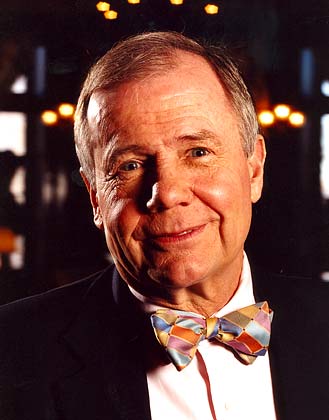
Jim Rogers plays the field but India's on his mind

Jim Rogers has come a long way. This poor boy from Alabama is today a legendary investor. With degrees from Yale and Oxford, and a reputation built on Wall Street, the world of investing keeps their ears peeled for his advice. For a guy from a rural village in the US, he sure knew his mind. He knew he did not want to become a lawyer or a doctor or a politician!

He told CNBC-TV18, "I read the Financial Times. I read as much as I could about what was going on in the financial world and in the economic world. I also read about politics, I read about everything. If you are going to be a successful investor, you have to know about the whole world. You can’t just know about the New York Stock Exchange, NYSE, you have to know about the whole world."

He did get a superb education but he says he didn't much learn about the market at Oxford. He recalls, "I didn’t know much about the market when I was at Oxford. I learned that later. All bubbles look the same, whether it is in India, Germany, Australia, Japan or in America - people act the same all over the world, whether during a boom or even in panic."

"As far as I am concerned, an MBA is a waste of time, money and energy. Many people think it is a way to get a job, it may be a way to get a job but it's not going to help you make money. Plenty of MBAs are not successful investors and many people, who have never seen a business school were great investors. So an MBA is very overblown as far as I'm concerned."

He had a unique kind of entry to the world of investing. He wanted to know if getting an MBA would be worthwhile and he was told by an experienced older investor that, if he learnt to short sell soya beans a couple of times, he would learn more, than at any B-school. The older man told him, "I assure you that when the soya beans go against you, you will learn a lot about yourself, the markets and the world."

Today, he's done well for himself. He began to look at countries to invest in and the asset classes that would really pay off in the long run. He explains, "I guess that came from experience - from realizing if a country is going to do better, we should invest in all the stocks in that country. If one thinks, commodity is going to do better, one should invest in all the commodities. If an airline industry is going to do better, probably all airlines are going to do better. It is something I have learned from experience."

"As far as I am concerned, an MBA is a waste of time, money and energy. Many people think it is a way to get a job, it may be a way to get a job but it's not going to help you make money. Plenty of MBAs are not successful investors and many people, who have never seen a business school were great investors. So an MBA is very overblown as far as I'm concerned."


Since he's made a killing on foreign playing fields, these are a few things he recommends that budding global investors should look out for. He elaborates, "I certainly want the currency to be convertible. One needs to make sure that there is a rule of law, make sure that there is liquidity in the stock market. You want a country, which has an improving balance of trade, it doesn’t have to be positive but it has to be up and on the rise. You have to have an economy that is getting better and an understanding that investors are good for a country and are welcome investors."

"There are countries which are obscure and cheap because people don’t know about it and don’t go there. I have invested in many countries that aren’t obscure. Japan is not obscure and I have investments there on the theory, that Japan is going to get a lot better. So, it doesn’t have to be obscure, it has to be cheap and one I think as a market, will get better."

Another guideline is really simple. Find something cheap and secondly, see if change is in the wind. He explains, "One can be a successful investor if you can figure out when something is going to change. If it is for the better, one wants to buy and if it is for the worse, then sell it and sell it short. Right now, I have been buying airlines when the airline industry was not doing well for the last five years. They have lost billions and billions of US dollars."

"In my view, there is change taking place, the airplanes are full now, the fares are going higher. Either the airlines are going to disappear or there is change taking place for the better. I don’t think we are going to take a boat to London anymore! I think we will be flying, so one way or other, the changes coming in is a positive change. Also, other things being equal, I prefer a company that does not have a lot of debt but if I think a change is coming and if it is going to be positive, then I don’t mind a lot of debt. I have bought companies in bankruptcy, and I think they are going to come out of it."

Jim is an experienced player and feels that an MBA degree doesn't prepare you for an investment-oriented career. He's also all too aware of the fact that he's the world’s worst market timer. He admits as much and says, "I am the single worst market time trader in the world. I have to be patient and I have learned that it might take a while for things to work out. That is okay because I have always learned that perhaps it is going to work out if I stay with it. I do worry about that, if a change doesn’t take place, or something derails the change, I would have to change my opinion."

"It is not easy to become a successful investor or get rich. It takes a lot of work. If one is not prepared for that, then one should not be investing. It is that simple. You are better off, putting the money in the bank and earning interest."

He also suggests that potential investors look at certain ratios to understand their purchases well. He advises looking at debt-to-equity and return on equity. This apart, the man has his own quirky ways of doing research. In Jim's case, he does his research in a very hands-on manner - he's famous for making his own spreadsheets - manually. He feels, this is the best way, a rookie could probably learn more in this manner, than in any other way.

He adds, "I don’t use Wall Street research. One has to be suspicious of everybody’s numbers. I am sure at Enron, there were people who didn’t know that there were problems. But if one does the numbers and compares them over a period of time, one will start to see problems showing up. One may not know what the problems are, but one can figure out that something might be wrong."

Earlier, he was sanguine about the Indian stock market but was gung ho about commodities. The bull market in Indian commodities is already on and it may last from 2014 till 2022. These bull markets last a long time because it takes a long time to bring out a new supply and when shortages develop, they go on for a long time.

This is beside the point that he feels that, "Commodities get absolutely no respect, though they are starting to - people are starting to learn how to spell commodities! I bet most of your readers have never bought a commodity (stock) and I bet most of them don’t know anybody who has bought a commodity. People know about stocks and bonds and very few of them know about commodities and care about them."

But today, things have changed. He says, "I am more optimistic about India than I have been anytime in my life. I still have a lot of skepticism. The market is a little bit frothy right now, I am not convinced that India is going to be the next China but India seems to be doing the right things, I know your politicians say the right words. I hope they mean it, but my problem is that I have heard Indian politicians for 15 years, say the right things!"

"In fact, I have sold out on the Indian stock market including the hotels. Though, I think Indian tourism can become one of the great investment sectors in India and in the world. There are other sectors in the Indian economy like agriculture, defence, education and tourism. In my view, India is the single best country in the world to visit from a tourist point of view. You have a combination of man-made and natural sites, food, culture, breadth of languages, of religions and everything else. And you always win the beauty contests!"

Written for www.moneycontrol.com

Wednesday, November 29, 2006

The secret behind Vedanta's success

After having acquired Balco and listing on the London Stock Exchange and coming out with the second most expensive IPO ever, you would think Anil Agarwal was done. But the chairman of Vedanta Resources, is ambitious and wants to put his company up there - right alongside the top two companies of the world. His being the first among equals.

His journey began in 1986, when his company made a turnover of a million dollars making cables, which is not the most exciting product in the world. He knew that he had to make the most out of it and grow his business to the maximum possible.

So, that is when he decided to take the business abroad. He told CNBC-TV18, "There were two aspects. One was that the metal business is no longer a regional business. All the wealth is in the First World and all the natural resources are in Third World. We took over the first two Australian copper mines about nine years back and it was very difficult but we managed it very well because we need the copper concentrate for our Tuticorin plant."

"In the last 15 years, we are the only company who has done a greenfield and a brownfield, project. We did a large Indian privatisation successfully. We bought a sick company (Balco) and turned it around. We took the company abroad. We took the company to Zambia, where it contributes to 26 per cent of the GDP of the country."

After making such drastic moves, he couldn't afford to take it easy and he was constantly benchmarking his company against other international players. He's borrowed BHP's successful formula, where they go to a Third World country to see the geology and get the funding and equity from the First World.

He agrees, "It was my model and I always thought that India has a tremendous opportunity because of the geology."

He feels that in this age, the theory of 'boundaryless' - a Jack Welch concept of sharing resources, ideas and strategies - works for maximum benefit. This works across a vast organisation but in this case, it could also be about sourcing and making use of the elements that is best for a company's future growth prospects.

Agarwal says, "I did realise that probably if I went to the London market, they understood mining better and I would get better value."

Agarwal's looking to improve his odds by being the lowest cost producer of every business he is in. He explains, "If you look at each of our business, in copper, we are the lower cost producer in India as well as in Zambia. In aluminum, we are also going to be a low cost producer. If you look at Balco, we have created another Nalco. When we took over Balco, it was producing 100,000 tonnes, now it's producing 350,000 tonnes of aluminum."

"Going forward, we will be expanding more because we find that we have the expertise. So we are definitely hungry to acquire more mines in any part of the world and are also looking at some greenfield or brownfield businesses in India."

Managing a global enterprise with different infrastructure levels was a challeging task and India was then, not on anyone's map! But Agarwal can take satisfaction in having done just that. He's put India on the global mining map and also made itself known to the international financial world in London and New York.

His second priority is shareholder value. He elaborates, "We are very conscious about our shareholder value. When we listed on the LSE, people realized the shareholder value and then they found out that we were basically an Indian company who were giving them better multiples."

He believes his team is a bunch of motivated people with risk-taking ability and a lot of credibility. He has put in a de-centralised management model in place. All his businesses are run by independent CEOs with the best people working in these divisions. Agarwal wanted the world to take Vedanta Resources seriously and he's hired the best to get the recognition he deserves.

He brought Brian Gilbertson, who was CEO of BHP Billiton on board as the non-executive director and chairman because he states, 'those are the people who will not come to you until and unless they believe that your product is right and you are right.' With Gilbertson having propelled Vedanta Resources into the limelight with the $876 million IPO, he has stepped down to make way for Michael Fowle.

But Agarwal concludes, "Vedanta has definitely shown to the world how cost can come down. When we took over Balco and when we took over Hindustan Zinc, the cost was $1100 a tonne. We brought it down to around $500 a tonne. We increased production from 100,000 tonnes to 400,000 tonnes."

He is conscious of his company's responsibilities towards the community and the environment they mine in. Keeping corporate governance on par with making profits, any new development including extensions to existing abstraction or operating licences undergoes an impact assessment, which includes a review of environmental and social impacts.

Opening new mines entails liaison with the elected local community representative. Compensation is given for any loss of land and this includes the provision of replacement land for relocated families and the opportunity for employment with the group for a member of each family who has been adversely impacted.

Agrawal's company also looks at building of infrastructure such as roads, making provision for water and healthcare facilities, wherever they operate. Apart from this, remediation measures are taken by businesses when mines shut down for good. This includes back filling and replanting, wherever it is required.

Written for www.moneycontrol.com

Tuesday, November 28, 2006

A bath that's refreshing & pricey!

Cutting edge technology has now entered the boring bathroom. For most, it's just an enclosed space to take a bath but the romantic and the rich are adding a whole new dimension to this room.

People are putting in a spa, jacuzzi and just about everything that would help them de-stress, after a hard day at work and especially after the tedious commuting. And there are a lot of manufacturers out there, trying to wriggle into people's homes. Hansgrohe is one such high-end brand. Their shower cubicle is worth checking out. This is a multisystem shower with about 15 torrents, which makes up the medicated steam bath concept. This includes body showers, neck massagers, steam and chromo therapy, the Scottish shower and aromatherapy, as well as a foot massager and a built-in FM radio, or a CD player that attaches itself to your speakerphone.


All this doesn't come cheap and costs as much as a brand new, small car. This shower system is priced at Rs 4.75 lakhs. Or, if you rather prefer to soak luxuriously, then the freestanding tub is what you'll need. Being freestanding, it means you can carry it into your living room and soak in front of your television and enjoy watching Baywatch or Psycho! A copper tub could set you back by Rs 1.2 lakhs.

But the ultimate, seductive device is a German jacuzzi, which hits you with 100 jets at a go and propels bubbles into the tub. All this to make bathing a very enjoyable affair! This is priced at Rs 95,000.

All this is for one aspect of cleanliness, what about if you want to sit on a top-of-the-scale loo and crow about it to the whole world? Well for such people, Keramag's new range of sanitaryware and accessories called the F1 series should do the trick. Porsche, yes the premier car brand, has designed a range of commodes, washbasins, bidets, bathtubs, furniture and unique original ceramic shelving.


The range distinguishes itself, especially through its natural line management. Bell-shaped washbasins symbolizes the "presentation" of water and this is all for a mere Rs 66,000. A floor mounted WC comes at a price of Rs 1.18 lakhs and a bathtub, that can be ordered from Germany, comes for a whopping price of Rs 9 lakhs.

Well, if you have that kind of money, then you may have a Porsche - the car - in your garage anyway!

Written for www.moneycontrol.com

Evocative first impressions


Bhavna Jasra was five months pregnant with her daughter Tia, when her husband inadvertently gave her another gift - the gift of a hobby that became a lucrative and creative profession. He took her on a holiday to London and that's where she got smitten - by a pair of tiny feet.

Though Bhavna wasn't on the look out for a business opportunity, but the two little mounted feet at a friend's home in London, had her hooked. She forced her friend to take her to the studio, where she had got the impressions made. There she got the typical English stiff upperlip behaviour - they gave her some brochures to look at and told her to come back, when her baby was born.

But Bhavna wanted to know more and she persevered. She waited in the studio for five whole days, to the point where Mrs Ferguson almost called the cops because she thought Bhavna was a stalker! But on the sixth day, Bhavna was invited in for a precisely five-minute audience with the lady, who made these impressions.

Mrs Ferguson soon allowed Bhavna to use her art, after she charged her a stiff fee for the franchise - enough as Bhavna says to "buy a house in London." So, after first getting her daughter's impressions made, very soon the marketing consultant in her took over. She says that the franchise fee was high, but she has more than made up for the initial investment. On the first day, she made over 150 impressions of newborns.

Today, she can demand her price and get it because she offers that kind of quality. Her impressions can come in diverse finishes, such as gold, silver, copper, bronze and pearl finish. Also the dimensions of the limbs matter as well as the frame, that it is mounted into. So she offers a choice of frames, like wood, wrought iron, one-piece glass bubble frames, (which is when the impressions are enclosed in a glass bubble and the only way to get them out is to break the glass). So keeping all this in mind - her price can begin at Rs 15,000 and go up to a couple of lakhs.

She's done so many celebrity impressions but she finds Bal Thackeray's the most fascinating one because as she puts it, she has always been a Mumbai girl and there's never a day, when he hasn't made news. She recalls that when she held his hands and immersed them in clay, her own hands were quite cold and he had wittily remarked to calm her down a bit, that "few have held the tiger by his paws!" She also cherishes the memory of doing impressions of Sanjay Leela Bhansali and his mother's hands.

Acclaimed filmmaker, Sanjay Leela Bhansali told CNBC-TV18, "When I see this (impressions of his mother's hands), it's all there - the lines that have come out on her hands, all that she's lived through is all there. It's primarily less of my hand and I think it is a wonderful gift that she's given to us."

Today, Bhavna is also a marketing consultant to some companies like Citibank and ICICI Bank. With no degree in marketing, she says it comes naturally to her because she could even sell a product in her sleep. While Bhavna is very satisfied with both her marketing assignments and First Impression, it's never done at the cost of time with the family.

Thursday, November 16, 2006

The US might make a martyr of Saddam Hussein

Saddam Hussein has been demonised quite a bit by the media and he does deserve it, to a fair extent. But when his trial has been such a travesty of justice, does he now deserve the death sentence? Wouldn't life imprisonment have been better, especially since the Americans have hardly got Iraq under control to begin with and their former president's death at the hands of an occupying power could so easily set the country up in flames?

Financial Times, South Asia correspondent, Jo Johnson told CNBC-TV18, "I think the verdict may be just but the sentence is wrong and a big political mistake. No one disputes that Saddam was guilty of many of the crimes for which he was tried. I think the political mistake is that countries which are behind trying him are seeking to impose the death sentence on him."

"For eg. Britain opposes the death penalty at home and normally wouldn't extradite people to countries which have the death penalty - it does seem to be extraordinary that our foreign secretary seems to be endorsing the death penalty. Britain seems to be caught in a complete political quagmire of its own making. A life imprisonment would have been much more consistent with Britain's stand on the death sentence."

But Strategic Affairs editor from Indian Express, C Rajamohan feels that to expect amnesty is futile because "we are talking about the consequences of war and it is not the first time or the last time, when victors have delivered justice. Given the conditions that exist in Iraq today, and in the broader context of the Middle East - the point is that a dictator pays for his sins and it's a reasonable outcome out there."

"You can keep questioning the process but it won't take us very far because he (Saddam Hussein) is a divisive figure in Iraq. If the Sunnis or the Iranians had got their hands on him, they would have handed out their own justice. So, we've got to see this in the right perspective rather than be troubled by whether the highest level of western jurisprudence will be applied."

National Public radio, South Asia, Philip Reeves disagrees and explains, "I feel the issue here is the moral authority of the people who are now running Iraq, be it the US or the Iraqi government. I think the task they have is to recover some moral authority, which they have lost over the last three years. And by applying the death penalty, they are missing the opportunity to show that they could have handled this differently, that they could have given him a life imprisonment and dealt with all his crimes and given the Iraqi people time for reconciliation."

Chief correspondent, South Asia, Al Arabiya, Walel Awwad feels that this sentence has made any ordinary American a target, anywhere in the world. He says, "I think counterproductive measures have been carried out by the Americam administration." But Reeves says that this would give rise to even more anger among the Sunnis and Saddam Hussien could become a martyr if executed.

Also there is the timing of the verdict. It's come just in time - right before the November elections in the US, and no one is surprised because it seemed like a foregone conclusion - that the judgment was delivered just in time to boost President George Bush's rating at the hustings.

So now, America seems to be caught between the devil and the deep blue sea and with no face-saving measure in sight to retreat with any amount of grace.

Written for www.moneycontrol.com

Wednesday, October 04, 2006

Narayana Murthy & Nandan Nilekani – divided they stand

They are the team that is the first couple of the information technology sector. That's NR Narayana Murthy and Nandan M Nilekani for you. The former, whose brainchild became Infosys is the Chairman & Chief Mentor while the latter is the Chief Executive Officer, CEO, President and Managing Director.

They are about as alike as chalk and cheese. Murthy is the Mozart and Elton John fan while Nilekani loves the Beatles and rock music of the seventies. So, it's anyone's guess that this team was going to be complementing each other perfectly. As Nilekani says, "They say that you should team up with people you can grow old together with, and that’s really been our story. We are with people who we are happy growing older with."

Infosys was a gleam of a vision in Murthy's eyes when he was toiling away like any other salaried employee. It's his wife Sudha who has an engineering degree, which she put to use on the Tata Motors shop floor, at their factory at Pimpri, Pune. She was a pioneer in her own way - the first woman engineer to work in an automobile factory.

Families had to put on the backburner while Infosys was being born. Murthy remembers the time when he was away in France for six months and his son jumped from the top of the car and broke his arm. His wife took care of it in her quiet and competent way. He only heard about it on the phone, when he called from France and his son told him that his hand was fine!

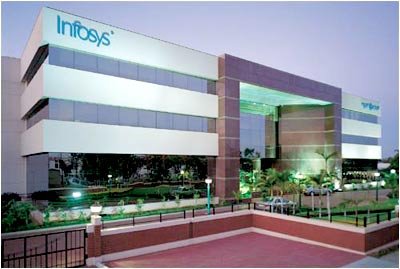
Such trials and "deferred gratification" as Nilekani puts it, paid off big time. So, Infosys started small - with USD250 in 10x10 room, with no fancy venture capitalists having spotted them and starting them off. Today, however, the company is listed on Nasdaq and it has a beautiful 70 acres campus in Bangalore.

Also on the anvil is a hotel for the business crowd that Infosys has managed to lure down to South India because the existing hotels charge much higher and make money at Infosys's expense. So it's smart on their part to direct that business their way as well.

But the story was about keeping the faith and that's what the team around Murthy did. Nilekani told CNBC-TV18, "Well, I think we all were working under Murthy’s leadership and we just jumped into it without even thinking or worrying because we said we are with him. He is an extraordinary leader."

"I think when the history of India is written, he will be ranked up there, among the top 5-10 leaders of this country and because he is able to lead by example. He is a very fair person, even though he is very tough, in fact is toughest mostly on me because he is very brutal in his feedback."

But feedback is welcomed, especially if mistakes that have been pointed out can be converted into lessons learnt. Murthy explains, "Well the lessons learnt are one, you have to benchmark on a global scale. Second, you have to lead by example. Third, you have to look at long-term interest. You have to look at the interest of the community, the corporation. You have to bring people, who have mutually exclusive but collectively exhaustive, skill sets and experience."

There has been an emphasis on accepting the company's value system and putting it before one's own. It's an ideal that everyone who works at Infosys accepts as a credo. Nilekani admits, "It’s something out there and all of us, any day, will subordinate our egos for that purpose." But this has served a purpose in the past. It's the very reason for their immense success.

Murthy acknowledges that and explains, 'I think the success formula is, one, we brought together a team, which has a common value system. Once you have an enduring value system, which means sacrifice in the interest of the company, you look at long-term rather than short-term. You don’t shortchange anybody. Here it is a leadership of the idea.'

He credits his destiny for the people he met and started out with. Five out of the original seven still work at Infosys and he says if he had to do it all over again, he would do it with the same people. But Infosys has managed to keep an exclusive image, by not hobnobbing with the business community at Page 3 events. Both Murthy and Nilekani have adopted a low-key lifestyle. They have both seen years of struggle, so the arclights do not enamour them, as their goals are bigger than the momentary fame.

Nilekani elaborates, 'I think our trip is building a great company. Our trip is really putting India on the global map, our trip is to create jobs for thousands of people. That’s what we get our excitement from. It just so happens that, as a byproduct of that, we also made some money but I think the real thing is that, that’s the excitement for us.'

Murthy adds, 'Also it’s my personal view, that people who are making capitalism become more and more attractive through entrepreneurship, I think we have to conduct ourselves in a manner that people see as approachable, people see us as one among them. As I have often said, the ultimate contribution of Infosys is that, there are thousands and probably millions of entrepreneurs in the country, who may think that if these seven jokers (people who started Infosys) could do it together, we could do it too. I think that is the ultimate compliment that can be paid to Infosys.'

Their singular approach has seen them make conservative guidance estimates and then stick to them. An attempt is made to make a commitment, which they can honour. Murthy explains, 'I think it’s a part of the value system. It’s about being trustworthy. It is about delivering on promise. So it’s about being predictable. So once all of us have agreed, we obviously have to say things or commit to things that we can really work toward.'

Obligations to shareholders apart, they don't feel any pressure when coming up with guidance numbers because a lot of the issues have been discussed threadbare internally. So once their minds are made up, it's just a matter of articulating it. So, a lot of argument happens back and forth but the better idea, from Infosys' point of view always wins.

Infosys has made it a matter of pride for people to want to work with them. There are interns lining up from abroad, who want to come to Bangalore to work. Keeping in mind the late hours, that employees may have to keep, Infosys has taken care of providing comforts and good quality facilities. How does a French restaurant, a clothing store, a hotel and a gymnasium sound? Well, all that's to be found on the Infosys campus!

Now they are selling the Infosys and by extension the India story abroad - at the World Economic Froum in Davos, in Washington and elsewhere. They are pitching a changed India to the global business community.

Murthy explains, ' A lot of things have changed for the better and if the government, the industry and all of us together, were to sort out a few minor issues - if we were to create a few visible signs of progress, like the airports, the roads etc - I think we can quickly go to the next orbit, which is $80-100 billion in just this industry plus the manufacturing sector.'

For doing this, though, Murthy rules out joining politics as he knows it's different from running a company. He says, 'It's one thing to run a company like Infosys which has a really enlightened democracy. On the other hand, to manage a country like India with it’s urban-rural divide, with its rich and poor divide, with huge problems. It’s not easy. I think we should be very realistic about our own limitations.'

In other ways as well, Infosys is a trendsetter. They put India on the map as the foremost destination for outsourcing but they were the first organisation in the world, to come up with a designation like 'chief mentor'! But for Infosys, this is only the tip of the iceberg.

Nilekani agrees, 'Well, I think in some sense, the journey is just beginning. Because we have managed to convince the world about our model, that it’s better model and I think the whole industry is restructuring and leaders are going to emerge from this in the future, who were not leaders in the past and we have a very good shot at being one of the leaders of the future. So in that sense, there is lots to be done and I think that’s what drives all of us towards our next goals.'


Written for www.moneycontrol.com

Thursday, September 07, 2006

How Harley-Davidson was rescued

What shouts Americana as much as motherhood, apple pie, Ford cars and baseball is Harley-Davidson - those huge, big throttle bikes. This brand has the kind of loyalty in the biking community and a brand recognition worldwide, that can only be the envy of many.

One man who has held onto this company is Willie G Davidson, after whose family, it takes its name. He told Ingrid Vanderveldt on a CNBC show called American Made, that this company is his hobby, his love and his passion. He says, "The products are emotional and therefore, we have loyalty second to none. The brand is world famous and I'm just proud to be part of it. I'm lucky that I can help keep the flame burning."

His passion for the bikes began in his childhood. Then his father, William H Davidson was President of the Harley-Davidson Motor Company from 1942 to 1971. He had a great passion for riding and this was something that his sons - Willie G and his younger brother John inherited. While, there was no pressure on the boys to join the firm, Willie G had a talent that would prove to be valuable. He could draw very well and while listening to history lectures in school, he didn't take down notes, instead he was sketching motorcycles!

He then sharpened his skills at the Art Centre and Design College in Los Angeles. He recalls, "After graduation, my portfolio was looked at by automobile design companies, industrial design firms and I actually wound up at a design firm in Milwaukee for a couple of years." At this job, he designed everything but bikes - he designed furniture, outboard motors to furniture. He couldn't design bikes right away because there was no designing department at his father's firm, so he moonlighted for the company.

By 1953, his father realised the need for a full designing department and that's when Willie G finally joined the family firm. He says, "We are close to our customer, we ride these bikes, we collect them, we design them and so, we have an intimate understanding of the products and what they are all about. We try and understand its history over all these years and use our heads to make sure, we can keep it going for the next 100 years. I think it can go on forever, if we do it right. But every company is vulnerable as we all know."

This company has a rich and long history. It was founded in 1903, at the turn of the century when transportation was in a state of flux. Wille G explains, "The original four - the three Davidson brothers and one Harley - were in the process of designing and producing prototype motorcycle, so you could get to your destination easier than on a horse (which was the favoured mode of transportation being used then). They were struggling trying to build this and they were working in a little shack behind my great grandfather's house. They all had jobs, so they did this in their spare time."

"Railroads were big then and they all knew about machinery. They used to come home from work at night, go into the shack and start making parts. There were no auto part manuals then, so they had to do it all themselves. They built a motorcyle, that they thought would have durability and that would work okay."

Around this time, the team ran into competition from another entrepreneur - Henry Ford. Willie G says, "Henry Ford created mass production and the Model Ts became equal in cost to a Harley-Davidson. So, back in the 1920s, everyone could have a car. So, we were no longer the cheapest mode of transportation." That's when Harley-Davidson made owning and riding a motorcycle a a fun thing to do, which continues to be its unique selling proposition even today.

These bikes also found their way to the local and federal government. In 1908, the Detroit police department had been utilising the bikes to help maintain law and order. During World War 1 and the Second World War, the Harley-Davidson founders were roped in to help with the war effort. They produced thousands of bikes for the US and its allies. These bikes were built to go over fields and rough roads, had high ground clearance, was painted olive green with a white star on the fuel tank and had a gun scabbard on the front fork.

In 1969, some of the owners of Harley-Davidson thought of diversifying their interests. Willie G, his father and brother did not want to do this and wanted to remain an independent company. But this company was an attractive cash cow, so the manufacturing group Bangor Punta approached Harley-Davidson shareholders and offered to buy their stock. To avoid this, the company leaders decided to look for a white knight - essentially a cash-rich third party, who understood what Harley-Davidson stood for.

They found AMF, America Machine and Foundry - a manufacturing company that made a wide range of products from food and tobacco processing equipment to bowling balls. AMF came in and quickly established who was boss, by incorporating their logo on the bike's fuel tank. This marriage wasn't turning out the way it was intended. AMF realised how capital intensive the business was and the quality had begun to slip. With the American economy in a recession and the Japanese bikes coming in, their problems just seemed to be getting worse.

So, in the 1980s, the company came back to its original owners because AMF asked them to buy it back! So, they used their personal networth, help from the banks and whatever they could raise personally to buy back Harley-Davidson. They managed to raise about $80 million. They had to rescue the company from debt and they were able to do it because they were passionate about it and believed in the brand.

But 1982-83 and 1984 were rough years because Japanese manufacturers like Kawasaki, Suzuki and Honda began selling in the US in increasing numbers and were able to build bigger bikes at lower costs. And this began to tell on Harley-Davidson's balancesheet. The plant was operating at 50% capacity and struggling to maintain the 13% marketshare they had. They had to layoff 1,800 employees. Even the banks were thinking of pulling the plug on them.

So, they went to the government to ask for assistance in putting curbs on Japanese imports, which the government agreed to do. And within a timeframe, Harley-Davidson bounced back. The company was held up as an example of American competitiveness and was even given a stamp of approval by President Ronald Reagan himself, who came to their plant and gave them a congratulatory speech.

Today, Harley Davidson has close to 1,300 dealers worldwide employing approximately 9,000 people who help move around 3,00,000 bikes each year. In Europe, retail sales jumped 20% last year. They are also No.1 seller of the 650cc and higher class bikes in Japan. The company's net income has risen 45% from 2001 to 2005. But keeping the customers coming is a challenge, which they are more than geared up to meet.

As Willie G Davidson says, the company has brand loyalty and recognition and some new products lined up as well. So, those die-hard Harley-Davidson bikers can ride on into the sunset.

Written for www.moneycontrol.com

Monday, August 28, 2006

Caught in a car crash

People are travelling more than ever these days. A holiday in the middle of the week can be enough for some people to jump at the idea of driving out of town to a nearby picnic spot, a waterfall, or take a trek into the woods.

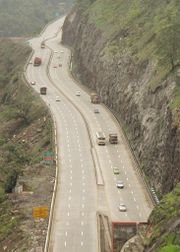
The Mumbai-Pune expressway has made it possible to go all the way to Pune in 2 hours, and what earlier used to take 4 hours. So people are whizzing up and down those smooth roads easily and more frequently. Here is a word of caution, yes, but not about overspeeding, but the repercussions of being in the right for a change, and still being victimized.

I know many people who drive in Mumbai, who must be tearing their hair out in frustration, every time they have to take their brand new car into the killing traffic. I must say, most Indians don’t drive with much respect for rules and road sense. (I’m Indian, so I know what I’m talking about and this isn’t a xenophobic statement). So, even if you are a good driver and you keep your distance and drive carefully, there’s going to be some moron somewhere, who will plan to kill you, or at the very least maim you.

On the open expressway, it is a real free for all. Cops are not around for miles and speed is genuinely any limit you chose to drive at. Also, poor driving sense is amply displayed on this stretch. So be careful. I’ve seen small cars like the Santro and Zen being so completely totaled, that they looked like they had been eaten by a machine and spat out. And of course, I shudder to think of the fate of people who got caught inside.

I’ve been in an accident on the Mumbai-Pune expressway and thankfully, my family and I came out alive, with my mum suffering mild scratches, where glass shards grazed her as the window splintered. My sister had a bruised rib, though she was sitting in the back, sandwiched between my mum and me. I wasn’t hurt at all, even though my brother had to swerve and almost climb over the road divider on my side, to avoid this state transport bus, that just pulled out in front of us, without signaling.

The bus rammed us and since we were going at 75 km an hour (for the uniniated, it is slow speed on the expressway), my brother had to get the car in control and so we stopped quite a bit away from the bus. The passengers of the bus had got out, but no one ventured near us. They were too busy tuned into the driver’s version of the story.

I remember telling them later that they didn’t have the decency to see whether we were alive or dead. The passengers stood around, gossiped and jumped to conclusions all in that 10 minutes it took us to recover from the shock of the collision and get out and walk back to the bus. Yes, another reason to be a careful driver is just this – people are not going to stop and help. They are more worried about the delay, than the accident. And because this bus was full of office-goers on the way home or to their shifts and who claimed to take the same bus every day, and knew the driver and conductor, they were even more convinced that we were at fault.

With people already prejudiced, you can’t expect them to help you and if you insist on asking for the bus driver’s licence number, you have another drama on your hands. The rule is that the driver can’t give you his licence number because he works for the state transport, and since the bus is the state’s property, the government is held liable for any damages that we seek and not the driver himself personally. How nice!

So now, not only is your car badly damaged, the crowd is getting inflamed because of the delay and also because you insist on the cops being present to file a report. On the expressway, a police station is usually 20-25 kms away, so tempers and frustrations are building. In the meanwhile, some of the bus’s passengers are bitching big time. Something like this: rich people-won’t take responsibility-show off contacts-delaying us-what do they think of themselves-our poor driver-poor us etc. I was honest enough to tell someone there, that one can expect small mentality from people like the driver, who probably doesn’t know better, but even some of the better-off passengers were displaying the typical narrow mindedness! This surely didn’t win me any admirers there, but the hell with it.

In such a situation you can’t win. But I still stand by my statement, that those passengers didn’t have any decency or manners. No one came over to see how damaged our car was or whether we were all okay or injured, until I made this comment. And this remark I made, did pinch a lot of the people there. Because, when two cops finally arrived almost four hours later (yes, we waited on the expressway for them with such a friendly crowd!), one man was furious. He told the cops, what did I mean by saying they didn’t have manners, is that the way to talk? Yes it is. You were there standing and watching the fun and when it began to pinch your conscience, you were forced to retaliate. This man also said something that, whether he realized it or not, showed off his class bias. I remember telling these people, that if this had been their own car, they wouldn’t be so quick to defend the driver.

This man later told the cops, that these people (ie. my family) think they are only ones who have driven or sat in a car; even I’ve driven a Mercedes. But that was just my point. You’ve ‘only driven’ a Mercedes, that belonged to someone else. Try owning one and then watch it getting mauled in an accident – there is a huge difference. Your anger would quickly be directed in the opposite direction, depending on, which vehicle your sitting in. Then, you would forget how many ‘best driver’ awards the bus driver had won.

There were many words exchanged in the heat of that moment. It was hugely stressful for us, and I admit that the bus’s passengers were delayed but this is a price you have to pay for being in accident - as if they didn’t know that. We would have to wait for the cops to file a statement, so that we could claim insurance, and it was too bad their driver was held up as result of it. After all, they were all standing up for him.

The passengers told us that the driver had just won the ‘best driver award’ from the state corporation and that he and the conductor really took care of the bus and the passengers. The conductor had installed a TV and VCR with his own money, so passengers had a good time. How nice, but did that really mean, he was right in ramming my car? None of the passengers, I spoke to could tell for sure what had happened, even the ones who had been looking out of their windows. Most said that they realised what had happened because of the noise of the crash!

When the cops came, they said that if we wanted to make a formal complaint, then the bus and our car would have to be taken back to their station and both the drivers would be given breath tests and then the vehicles would be checked for any mechanical faults and what speeds they were being driven at, and then statements would be taken down. Meanwhile, the bus and our car would be with them, so we would have to hire another car to go home and keep coming back, as and when the case progressed!

Do you realize how incredibly skewed the system is against the private vehicle owners? The conductor had called for a replacement bus but we had to call for a car, or just let this matter go. My dad called up a cop friend of his (that’s why it’s important to have contacts, something those passengers will learn, only when they are at the receiving end of this kind of unfairness), who told the cops at the scene, to file a statement there itself as a favour to him and that we won’t be pursuing the case, and that we needed the statement for claiming insurance, and that we won’t be holding the driver ‘personally’ accountable.

That’s how it really works – the law. The irony is that my father is a lawyer and he saw the nasty side of it for the first time in his 40 plus years of being in the profession.

By then, after 6 hours or so, the replacement bus had also arrived with a supervisor, who told us pretty much what the cops did and also told the cops that he wanted damages from us for the bus! So to get a statement written down on the site of the accident, we had to pay Rs 400 for the dent at the back of the bus.

And as if that wasn’t enough, the passengers also decided to test the waters and started yelling for “damages” for the time they had wasted there! Well, talk about man being a rational animal. Obviously, some people haven’t evolved that much. If there is way to milk other people’s misery, some people will find and use it.

It was the cops who calmed them down and told them to get into the bus as the matter had been resolved. Actually, if anything, it just shows how matters like these are never resolved. It left a very bitter taste in my mouth and I carried along a lot of unsaid comments for months after the accident, that I wanted to fling in those passengers’, cops, driver, conductor and supervisor’s faces.

I remember having the parting shot. I told the supervisor -- so this is why you guys kill for government jobs. Because you know you’ll never have to take responsibility for anything!

Written for www.dancewithshadows.com

Tuesday, August 15, 2006

How AIDS touched my life

This is a story of an innocent life shredded to pieces and it will make many angry, still many will feel sad, but most will feel helpless in the face of the big terror called AIDS. It’s an incurable scourge that invades your body and once there, your entire life becomes hostage to it.

You can put on a cheerful mask and walk around among healthy people, but like the living dead.

This is the story of one such person. Shobha was a bright, pretty, hardworking teenager who came to Bombay to work for us. She lived on my grandmother’s island (A Village by the Sea; Mangalore), and my mum brought her to Bombay so she could have a shot at a better life. Her family were one of my grandmum’s neighbours back in Mangalore and their home was a hop, skip and jump away. But that distance didn’t reduce the fact that there was a world of difference between them and us.

My grandmum was the daughter-in-law of a family that rented out boats for fishing and these people were the hired help. In a village, a family’s economic situation is not as starkly visible as in a city, where slums and mansions co-exist. Shobha’s family had food to eat, a house to live in but a lot of mouths needed to be fed, as is always the case.

So, my mum brought her away to Bombay in 1977 and a year later, she was expecting me. So, it seemed like a perfect arrangement – mum got a young maid for herself, a nanny for me and Shobha got a better home and a lot of food for herself. She was around 12-13 years old at that time.

But by the time, I was about a year old, she had left us for good and gone back to Mangalore, where her family said they were looking to get her married off. She went away – suspecting nothing.


Shobha hovers behind me in this picture, I was 8 months old.

What happened to her after she went back is a subject of constant whispers and rumours, even today almost 27 years later. The most popular being that she was sold into prostitution by her family. They acted as pimps for her. She serviced fishermen who could afford her, contractors and engineers who were sent to the village to lay down roads or water pipelines, rich businessmen who owned the fishing trawlers etc.

The result was three good-looking sons from different men, who fortunately for them, looked like Shobha, so even though tongues wagged constantly, finger pointing was kept to the minimum. Those kids were always hanging out with my cousins and me, whenever we were at our granny’s for the holidays. It didn’t matter to us, what their mother did for a living and who their fathers were. Those were such innocent days, playing and running around with a prostitute’s children without a care in the world!

We never discriminated between her kids and ourselves but she was always hovering in the background apologetically. It didn’t occur to me until I was much older, why I was refrained from going that – hop, skip and jump distance – to her house. She had a affection for me that she obviously didn’t have for the others because she had helped mum raise me for a while. So, there were treats for me like ripe mangoes plucked and brought over or even the raw ones, which I love to slice and eat with salt. She also bought and gave us fresh fish, which my granny would insist on paying for. But she always stopped short of entering the house itself, no matter how much I asked her to come in – she knew something that I didn’t – she wasn’t going to be tolerated inside the house by the adults, no matter how much the eldest granddaughter wanted it.

During my college years, my visits to Mangalore became infrequent and I finally went back last year, after almost 10 years. So, much had changed in my life. I was no longer the kid who pranced around my grandmum’s fields and cowshed. I was a boring adult with a job! So, much had changed in Mangalore – there was a bridge built (from the jetty on the other side to the island), finally piped water connections would be given to each home, my uncle had torn down the old house and built a modern bungalow.

But Shobha was the same, amazingly thin, despite three pregnancies and so much else her body must have suffered. She still had clear, smooth, wrinkle-free skin, that would cause envy here in the city. She was smiling as usual and also keeping her distance, as usual. But this time, my aunts muttered to me under their breath, that I should just say ‘hello’ to her that was about it. I asked why and they evaded some more, as if I was 10 years old rather than the 27 year old I was.

Then I told my aunts, that I would ask Shobha herself, how life was treating her and how her kids were doing now, and why my aunts were pretending like she was a ghost to be avoided, rather than a flesh and blood person. They were suitably shocked and knew I would do exactly that, So, out came the truth – Shobha had AIDS. It was just a matter of time.

Everyone in the village knew about it – Shobha was treated as was normally possible by people, who have little or no information about AIDS, but only know it’s incurable and is fatal. If there was a camp for God’s rejected souls, then she certainly would have been left there, by her heartless family. Her meals never really filled her stomach. I guess the ghastly logic that must have gone around in the minds of her family members, who destroyed her life must have been – she’s going to die anyway, so why not starve her slowly and gently. These people had lived off her earnings and her body for so long, and now she had become a liability to them.

The sad part was that since AIDS really has no cure and symptoms can only be controlled, and only for that long, her family knew that - care for Shobha or neglect her – either way no one will know the difference. I was so angry about it and I wanted to do something for her – even hand her some money as a last resort. I tried talking to my aunts about who was the doctor treating her and they said, they didn’t know, and they thought her family was not bothering about taking her to a doctor, in the first place.

But Shobha herself, didn’t seem to care anymore. She didn’t want me or anyone else to worry about her. She also kept a more than an unusual distance and never came around to granny’s house the entire time I was there. She didn’t want to talk to me about her condition, her family’s ruthlessness - she had just given up on herself. I went to live with an aunt on the last few days of my visit, and that’s when she sent over a basket of raw mangoes. It was a farewell present – and one that I will never forget.

I came back to Bombay and I heard from my relatives that things had gone from bad to worse for Shobha. A few months ago, she died of the disease mercilessly stalking her body.

Or rather, as rumours go, she may have been murdered by her family. The story goes that one night, her family just lifted her up from her bed (by then she was unable to walk) and took her down to the river and drowned her! The official story is that she committed suicide, something which the rest of the villagers don’t believe in.

I don’t either. Shobha had too much spirit, to disappear quietly into the night. She must have realized, that the disease exposed her family for what they had done to her like no amount of whispering and gossiping would have. She was a stinging, living reproach to them, and their greed. She just had to be done away with.

But she lives on for me, in my memories. This is a tribute to her flawless style – the acceptance of a horrible destiny that was not bequeathed to her by God, but by her fellow humans – who have a lot to answer for.

Monday, August 14, 2006

One billionaire's pudding is another's poison

Managing Partner at TCI New Horizon Fund, Madhav Bhatkuly went to the London School of Economics, LSE, to beef up on the many theories that abound in the field of financial economics. But he was always intending to come back to India because something here had caught his interest. It was the way the stock market works - the intricacy and the mechanism and the beauty of it appealed to him.

Inspiration & motivation
But another source who lit the fire within him about the stock market was his best friend's father, who was then the Chairman of Citigroup. Bhatkuly told CNBC-TV18, "I had a close friend and his father used to be the chairman of Citigroup at that time and he used to lecture at the stock exchange, virtually after every budget. So I was chatting with his son one day and his father was preparing for the budget speech and I asked what is this? He said that I am going to talk about the stock market and the implication of the budget."

He recalled, "So I asked him what is the stock market and how does it really function? So he said if you want to be a part of a very big, successful and famous company but you don’t have the money to own it, and you want to own just a small part to be part of the story, then the stock market is the place to go. And actually, in many ways that was the defining moment. It first got me interested, that here was an opportunity to be a part of history or a part of success."

At the LSE, he majored in derivative products. The entire field was new back then so he didn't have many textbooks to study from except the one written by Fischer Black and Myron Scholes, which had come out just a few years before he graduated. So he was lucky enough to study original research. But when he got back to India, he realised that all those theories he studied were of little use. It was really experience that counted.

He began his career with ICICI, which was purely a project finance institution at that time. Madhav recalled, "I was busy going to greenfield project sites and doing spreadsheets and cash-flow analysis on Lotus (software). But it was an extraordinary experience. That gave me insight into corporate India and helped and shaped me as an analyst. I think that job really taught me or gave me the bridge between everything that I had learned in theory and the real world - of what drives earnings models and businesses and also to work with entrepreneurs, which I think has actually contributed to the process of investing today."

Investing principles
He doesn't believe that investors reach a magical circle of competence, as supposed by some. But investing is a process of trial and error, just like everything else. He said, "I think with experience and consistently just simply going out and doing the job, you begin to understand some things naturally better than somebody else."

After all, even the billionaires of the world have not made their money following any one holy grail. Benjamin Graham has been quoted telling Warren Buffett, "Warren the money won’t make a damn difference to you and I, our wives might just live a little better!"


All the same, some of these successful investors have followed their own path to riches. Warren Buffett has never invested outside the US. On the other hand, Sir John Templeton wanted to go out and buy the entire Indonesian Stock Exchange, the very first time he felt bullish about Indonesia! George Soros keeps it simple - he buys when the price is not right and sells when it is - the very essence of stock market trading. So, each of these men are rolling in money but have all arrived at it, in their own individual style.

So which style does Madhav call his own? He explained, "If I have to identify myself with one particular approach, at heart I would call myself a value investor. But value can mean different things. Is it prospective value? Is it enduring value? Is it value based on history etc. I spent most of my early career or the last few years as well, in small cap stocks, where perhaps the market efficiencies were higher and maybe because they were illiquid or for whatever other reasons."

Evaluating businesses
He looks at different valuation methods for different businesses. For instance, if it’s utility, he may use the discounted cash-flow, DCF, method but for anything else, he might use a different concept.

He added, "But along with that, it was also important to understand leadership in the business in its entirety. And what I looked for primarily was whether there was hunger enough to inspire that CEO to want to make it into a bigger business. Also, was there a cogent strategy and more often than not if you meet a lot of business leaders, you will find that some of the best or the most successful leaders are very well put together in their thoughts."

Also managements which spend time in execution of strategic visions is what makes "the difference between a good idea and a successful one." Madhav also believes in getting his facts and figures cross-checked with the mid-level managements of companies.

He explained, "It is important to visit second and third-line managements across the company. To first of all understand whether you were receiving the same soundbytes as you would hear from the top. But more importantly, were there processes. Was there enough in terms of execution capability and deliverable action points built into the system itself."

According to him, Sun Pharmaceuticals and Godrej Consumer Products are two companies, which demonstrated his belief in executing strategies and that had processes in place for doing so.

Indian stories
Analysts need to be able to spot what's going to provide a margin of safety with regard to every stock their looking at. It could be prospective earnings or absolute assets. He spotted this safety point in the shares of Oriental Bank of Commerce, OBC, when it was in the red and was burdened wth NPAs that were not serviced.

He elaborated, 'We were the first foreign investors in OBC, at roughly about Rs 55 a share. It went through a terrible period as a result of which it had accumulated non-performing loans in excess if 9%. But two years prior to that, there was a change in leadership. There was a new leader who had cleaned the processes. So as a result of, which the company had begun to have a shift towards identification and greater disclosure.'

'We also found that interest rates in India had fallen so much, that OBC had 41% of it’s book in Indian government bonds or treasuries, and that the unrealized gains on the securities portfolio was greater than the market cap. This meant good news - that it could have wiped off the NPAs in one shot! So the margin of safety was very clearly visible.'

He found absolutely great value waiting to be unlocked in United Breweries. He reiterated, 'I think United Breweries is a very good example of startling value. The company went through two phases. One, when it was a consolidated entity and it had non-core assets including 40% holding in McDowell as well as huge real estate holdings. So there was huge value which could be harvested at some point of time.'

He added, 'If you look at or dissect the management of the business in two facets - corporate governance and market leadership. They have delivered dramatically on market leadership, I mean, here was a company which clearly knew what to do in the market place, Kingfisher made up 40% of the Indian beer market for several years and eventually went up to 50%. Kingfisher as a standalone brand was 27% of India’s beer market. So obviously the company knew what to do in the marketplace but it wasn’t translating that into profits.'

Spotted deals
Oriental Bank of Commerce
Godrej Consumer Products
Sun Pharmaceuticals
United Breweries

'When we first looked at just the beer business, we spent a lot of time figuring out what normalized earnings would be because the company had no profits. So what was the intrinsic worth of those profits? For that we looked at a company in Sri Lanka called Lion Beer, which was a Carlsberg’s joint venture in Sri Lanka. We were just trying to do a little bit of analysis in terms of the dynamics and what the costing was and we figured that the margin of safety was very large and there was an opportunity here.'

http://www.bufferstock.org/graham.htm

Written for www.moneycontrol.com

Tuesday, August 01, 2006

How the elephant can use the dragon

Fifteen years ago, when India was taking its first diffident steps towards economic unshackling, a full complement of analysts and strategists were ready with their growth prescriptions. A lot of water has flown under the bridge since then.

The question now is - has India lived up to its potential?

This question was put to three Harvard Business School professors - associate professor (administration) Das Narayandas, senior associate dean Krishna Palepu and chair, organisational behaviour Nitin Nohria.

Nitin Nohria told CNBC-TV18, "I think it's really remarkable to see that how much progress has been made over the last year. My sense is that the sea change that I see or the critical inflection point that I see is that, companies have moved from a defensive posture to now being in a genuinely aggressive posture in terms of global competition.

Until the last year, the sense was that Indian companies were really trying to fix their own businesses to compete domestically relative to the global competitor. I think now that they have developed the confidence that they can be successful, they are finally beginning to look outwards.

Like the Tata Group going out and buying Daewoo, it's just one example of how this more offensive posture in terms of what, at least we think, is a shift that we have see in the last year."

Krishna Palepu echoes Nohria, "I think that's a very important change that has taken place. The level of confidence (has grown) in risk-taking and in exploiting, not only the domestic market but global markets as well, and seeing growth opportunities as opposed to thinking in term of restructuring.

"The only contrast is the ambition level that Indian companies exhibit, (which) is modest compared to, for example, the ambition level that the Chinese companies are exhibiting. It's a first step but we still have a long way to go."

Chinese companies have been aggressive and have been gobbling up big chunks of the world's output of grains and metals, especially steel. So has India remained quivering, in the wings and just watching it all happen or are we participating?

Says Das Narayandas, "I think till a few years back or till last year, the dominant question was can we, in the face of everything that's happening, survive and manage in the domestic markets? This year, as I look around, I think it's (now) changed so we can."

This new found confidence has changed the equations considerably for many. Narayandas said, "If the first few things don't happen right, which will be the case if you are going to be more aggressive, then it shouldn't be that we immediately start to climb up and become self-doubting thomases.

"It is very important to have the resilience and the market should be willing to take a couple of hits but (should) support entrepreneurs, who do take the chances. So any mistakes will not be the entrepreneurs'. I mean they have to take chances and they will. It will be the markets (responsibility) and their patience and their willingness to stay with them."

Palepu adds, "Not only with the markets but the press actually because the press has to mature in analysing these things, that when you have moved industrial activity to a more risky path and more ambitious path, there will be mistakes that will be made, but that's a part of the learning process and people need to put that in perspective and educate the market.

"For example, if one of our pharmaceutical companies spends a lot of money on R&D, which doesn't work out, but that's R&D done, sometimes it doesn't work out. You can't just write it off saying that now this company doesn't know what it is doing."

He elaborates, "If one of the companies goes into acquisitions and has difficulty in integrating it, that's part of the learning process. So you need to have an overall perspective. But at the same time, that's not a license for being totally careless in the way you do things.

"But (my) interacting with Indian managers (shows that) they are pretty cautious actually. I think historically, they have been trained to be very cautious in the way they grow and manage things and so I don't worry as much about people making reckless moves, as much as, not having high enough ambitions, as a vision for the next 5-10 years."

Nohria commented on the changes in the business environment in India, "There are many companies (which) are examples of really major players that were non-entities ten years ago. I mean Bharti is a company that Krishna has studied and this was non-player ten years ago and it's a huge enterprise right now. Jet Airways is another example."

He explained, "If you look at what has just happened with deregulation. Over ten years, there are clearly some examples that have built really substantial companies in a domestic sense and then hopefully, some of these people will become global too. As we know, airlines are expanding or being given opportunities to go international. At least this is an opportunity for Jet Airways to become a major rival to British Airways in the London-Bombay route, which is the most profitable route. So there are clearly opportunities that are being created. There have been many more Indian companies (that) we now take for granted but they weren't there ten years ago."

About five years ago, China was where the MBA students seemed headed. This was an exciting, unexplored, fertile business turf. But with perceptions changing, a fast track route and a single window clearance being promised in India, China is losing its allure, or is it?

Says Nohria, "As we have been struggling with trying to clean our act, China has had its act in place. So, as we were in this mode, that was more defensive, they were in a mode that (was) relatively more offensive and so it got framed as India versus China debate.

"There is something inherently energising about a comparative debate. But I think there is probably a better way of framing it and I think Krishna has really framed this in a way that I find very compelling."

Palepu reiterates, "The other very important thought process we need to have is that, it's not just China, but China plus Hong Kong plus possibly, Taiwan because they have lot of business linkage.

"So, when you think about that and actually think about India and compare, the comparison really doesn't make sense because it's a agglomeration of three very different stages of development. Hong Kong is almost in an advanced kind of stage. Taiwan has been in the middle stage of development and then you have China. That's really the combination that you are looking at."

He explains, "So if you frame it as comparative issue, it's a lost cause in some sense because you are not just looking at China. We can say we (India) have an advanced financial system in the stock market but China doesn't have it. Not true, if you include Hong Kong stock exchange or you can say we have entrepreneurial companies but China doesn't have, not true if you include Taiwanese companies. So actually frame it as a total stuff, it's a more complicated issue."

Palepu adds, "But I think the opportunity here is to take advantage of the complementarities between the two countries. I think individual companies, to their credit, as opposed to observers like us, who might be thinking about a comparative race, are seeing these synergies.

"I think first of all, Indian IT companies are going and setting up shop in China to exploit markets from China into Japan or into Korea, where actually the language skills and the culture is more compatible. Indian pharmaceutical companies are going into China and trying to exploit the domestic market there."

Palepu suggests synergy can be achieved in other sectors, apart from IT. He says, "Take Tata Motors and Indica. There is a niche in China, that is very similar to the niche that Tata Motors has been able to hit so well and there are a large number of consumers in China, looking for a product like that (Indica), which they don't have because all multinational car companies roll out their own traditional stuff and therefore an opportunity is there."

"Other areas could be hotels because of the explosive growth in the Chinese economy, so business travel is increasing. I can think of many areas where Indian companies can go there and given the skill that we have, the market is somewhat similar, in many ways and slightly ahead of us. Open your mind (to Chinese competition) and not see them as rivals but as a business opportunity (that can be) taken advantage of and for collaborating."

Krishna Palepu's Case study: Where India scores

A Taiwanese hardware company called Inventek, that has major operations in China has a billion dollar plant in China, that produces notebook computers and is a very sophisticated operation. (They crank out a notebook computer in 15 seconds.) But the one thing that the CEO was telling me is that despite their being very sophisticated and an extremely productive operation, they don't make much money, and the reason is that there is lot of competition for this kind of contract manufacturing, and China makes it very easy with all the infrastructure being available.

Inventek's CEO admires Indian software companies, which serve the same customer that he serves, but they are making a lot of money. Inventek started 20 years before the Indian software companies did and they actually have more advanced technology but don't make any money. The software companies from India, who started 10-15 years later, are able to make lot of money. So how does India do it?

The CEO came to India on a mission to learn and to find out how to serve customers and make money. Now, Inventek is considering setting up a software facility in India and when Palepu asked him, "why do you want to set up in India?" He said, "If you really want to learn how to build a big software business, you have got to go to India." So they are considering setting up an operation in Hyderabad but in a way that is synergistic with their hardware operation but (plan) to build more value-added components using Indian talent.

Written for www.moneycontrol.com