Great

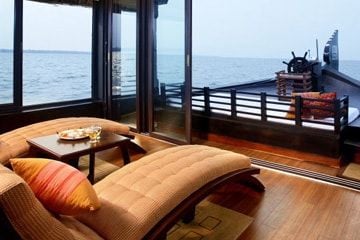
Fancy a Kerala houseboat as a vacation home?

Ever coasted down the backwaters of Kerala and lived the good life and wondered if you could own one of those beautiful houseboats as your...

Wednesday, March 05, 2008

Flaunt a yacht...if you can!

If you have the cash to spare and want to splurge on something that will make your neighbours go green with envy, then why not spend on a yacht? There are a number of people in India, who’ve decided to make this multi-million status symbol available to Indians who want to ride the waves with panache.

Firms like Sorenstam, Ocean Crest Marine, West Coast Marine, Marine Solutions, Navnit Marine, Royal Yachts and Cruisers, Ferreti Yachts and many more have all sprung up to fill a void in the burgeoning Indian market.

Some people have jumped into this tried and tested waters - like the skilled yachtsman Aashim Mongia of West Coast Marine. He loves the sea and joined the NDA. But a rare blood disorder threw his career off-course and he decided to go into business for himself. He initially did find the going tough but now feels that the good times are all set to roll and he’s happy to ride the wave of prosperity. But sometimes, it’s about providing a service that you realize is completely lacking, when one goes to buy a pleasure boat for yourself.

Riyhad Kundanmal of Ocean Crest Marine is doing just that. This trained architect has branched out into the yacht selling business because when he was looking to buy one for himself, he realized there was nothing remotely structured about the market in India. So, he decided to take the plunge, as it were, into an appealing and nascent business opportunity. He’s also selling these yachts along with some luxurious homes he’s designed as a kind of package deal.

So, how does one avoid pitfalls when buying something this expensive? Do your homework. So check out all the great cruising options at the Mumbai International Boat Show, which is on from February 28 till March 2, this year at the Gateway of India and the Bandra-Kurla Complex. Visit www.mumbaiboatshow.com for details.

You can also make a beginning by asking the right questions! Director of Marketing, Ocean Crest Marine, Rihyad Kundanmal answers some pertinent ones.

Q1. How many yacht buyers are there in India?
A1. With the emergence of Ocean Crest Marine in the yachting arena, yachting has suddenly become affordable to all. A sport that was once considered only for the elite few, has now emerged with yachts starting at under Rs 15 lakhs and which is delivered to your doorstep. What the Tata Group is doing with cars, Ocean Crest Marine is doing with boats. We’re making it affordable, especially considering that India sits along a vast coastline which has untapped potential and is virtually virgin to the yachting world. With over 1.5 billion people in the country, Ocean Crest Marine is targeting only 1% of that population - around 15 million to say the least.

Q2. Do you sell most outright or is there some EMI system in place? If yes, how much does an aspiring yacht owner have to cough up per month?
A2. Ocean Crest Marine is in the process of tying up with several finance companies to assist a potential customer with their finance needs. Besides the cost of a captain (starting at Rs. 6000 per month) and the fuel cost depending upon use, the boats are completely covered with a 5 year manufacturers warranty.

Q3. From where do you import them or are most of them custom-made in India to save costs?
A3. Being the importers of Marques Monterey and Formula Yachts (USA) - both brands having 5 year warranties - we are positioned to ensure that anyone and everyone has access to yachts. Safety, superior materials, advanced technology, economical yet powerful engines, and standard onboard equipment, that other manufacturers would consider as extra options, as well as the pricing, are the factors that Ocean Crest Marine stands for. Indian manufacturers unfortunately are too far behind with technology and understanding the needs of a ocean going vessel. It’s like comparing a Bentley of the seas to an antiquated Fiat!

Q4. Is there a time-share scheme for using them and if yes, how does it work? Please elaborate in terms of cost of fuel, services provided, usage etc.
A4. With a boat under Rs 15 lakhs (the cost of an entry-level car), it would not be prudent to get into time-share schemes. But boats that are over 40 - 50 feet. Ocean Crest Marine does charter their fleet for an average of about 4 hours and it costs in the range of approximately Rs 1.5-2 lakhs, which depends on the wines and catering required. Captains, deck-hands and fuel is included in the cost. Ocean Crest Marine is moving into the lodging world, whereby destinations are being set up across the country to make it viable for an adventurer to spend weekends with a purpose, rather than just cruise up and down the coast.


The Mumbai International Boat Show is organized by Ocean Blue which is a holding company that services yachts via its firm Ocean Blue Services and it also owns Ocean Blue Marinas, which is into developing marinas. Dr. Malav Shroff, Managing Director of Ocean Blue clarifies and says, “You don't need to be a member of the RBYC to get a mooring. The cost of mooring ranges between Rs 2000-5000 per month depending on the size of the boat.” Here he answers FAQs.
Q1. Does one need the permission or membership of the Royal Bombay Yacht Club or the Bombay Sailing Association to berth a yacht, which isn't easy to get. Can one berth their boats off Alibaug or Mandwa?
No, you cannot. However, it is a misconception that it is difficult to get a mooring for your boat through the RBYC. Anyone who buys a yacht can approach the RYBC to get a mooring. (Berthing is different from mooring). It is not mandatory to get permission from RBYC either, as actually, it is the Mumbai Port Trust who has authorized the RBYC to give these permissions. So, technically one can get mooring directly from MbPT. Registration of boats is through the MMB (Maharashtra Maritime Board)

Q2. What are the maintenance costs incurred? How steep are they and are experts available to help maintain them?
Maintenance costs range from 4 - 7% of the value of the yacht and increases with size and complexity. For eg. a 20 foot boat would be about 3 to 4 % p.a. while a 100 foot boat would be above 6 to 7% p.a. because it requires a permanent crew. The expertise is still evolving in the marketplace and is still in its infancy. There is still a long way to go to match international standards.

Q3. Where are the boats docked during the monsoons? Is there a special dry dock of some kind?
Smaller boats are dry docked on land and larger ones are sheltered in the protected waters of the Mumbai Port Trust.

Q4. So far, how many Indian customers have bought yachts from the dealers at your event?
In the region of about 200 - ranging from kayaks to super-yachts


Q5. Which yacht brands/models are popular with your Indian clientele? Are they what's considered 'happening' with foreign owners or are we miles behind them?
A5. The Formula and Monterey brands are considered one of the safest and most reliable in the world. What is in the international market is also in the Indian market. The Indian clientele is well advanced - having travelled the world - they are pioneers in trying things well before their foreign counterparts.

Q6. Can you give me some names of people you've sold yachts to?
A6. I could give their names, but unfortunately that would be unethical. Our yachts start at under Rs 15 lakhs and go up to over Rs 500 crore. It would not be fair to dwell into personal lives.

Q7. How much do you foresee a market for this aspirational purchase in India? Meaning, it's obviously not a volumes game, so how many yachts do you see yourself selling in a year?
A7. With Ocean Crest Marine making it affordable for all, we have in the last 3 months itself, sold over 47 yachts across the country. We anticipate our sales to cross well over a 100 units this year itself.

Q8. Lack of a marina is a big hindrance for yacht owners. Are you looking for some sops from the FM in this budget towards really developing the Western seaboard (specifically Mumbai)? If yes, what's on your wishlist?
A8. Fortunately, the boating arena is opening up for the first time with a concerted effort being put in to improve the dismal situation. Citizens are becoming aware of the need of (developing) the waterways due to the poor situation of the roads.

In order to improve the boating infrastructure, we would need to have breakwater barriers made along with suitable floating marinas, so as to make it safe for the passengers/owners to have access to the boats - not only throughout the coast, but within parts of the cities itself. For example, North Mumbai can become accessible to South Mumbai with the assistance of a marina because the traffic congestion in the city will be eased, and heavy expenses on the roadway infrastructure is saved. In addition to this, the government needs to either lower, or completely eliminate the import duty structure from the existing 35%, so as to make it viable for the consumer to opt for a boat for his daily commute, rather than be imposed with heavy taxes, which obviously discourages movement on waterways.

Along with this, the Government would need to work on marine falls near the sewage outlets, whereby the sewage itself will not be washed back ashore, but rather falls into the trenched, underwater pits.

Q9. What smart tips can you give to aspiring buyers? In terms of what to look out for and not get taken in by the glossy brochures and glib sales talk?

A9. Before buying a yacht or a boat, Ocean Crest Marine understands the needs and wants of the potential buyer, and then suggests a boat or a yacht that suits his/her needs. If one simply wanted to cruise the harbour; travel across the shipping channel; go on to the high seas or even for that matter, travel to international destinations, we would suggest something that would be the right choice.

Safety being the most prominent factor. Before handing over a yacht to a client, we hand over a qualified captain in addition to the training we impart to the buyer himself. Our part as the sales team is not to sell the yacht and feel that our work is done. On the contrary, our work only begins there, as we want to ensure that the after-sales service is far better than the sale deal itself.

Q10. In Mumbai, you need the permission or membership of the Royal Bombay Yacht Club or the Bombay Sailing Association to berth a yacht, which isn't easy to get. Can one berth their boats off Alibaug or Mandwa?
A10. It is a misconception that memberships are required to berth boats in the Mumbai Harbour. Memberships are encouraged and recommended, but not mandatory. The reason for memberships is to avail of the private slipway opposite the Taj Hotel, which has been leased to the Royal Bombay Yacht Club (RBYC), the Bombay Sailing Association (BSA) and the Colaba Sailing Club (CSC). Memberships indeed can be expensive and exclusive, but the Colaba Sailing Club has a one-time entrance fee of Rs 10,000-12,000 and an annual renewal fee of Rs 2,000-3,000. Memberships are open and available to anyone interested or keen on sailing. Non-members too can avail of the bay, but at the same time cannot use the private slipway or the facilities of the tender boat service to and from their yachts. They can use the non-private slipways at gate 2, 3 and 4 near the Gateway of India.

Boats can indeed be berthed off Mandwa as well, but once again, it is strongly urged to have membership(s) for any facilities needed. Once a member of any sailing or yachting institution - either in Bombay or Mandwa - the use of the Club tender boat is reciprocal.

Q11. What is the cost of these memberships?
A11. The RBYC costs Rs 5,00,000; the BSA Rs 1,00,000 and the CSC Rs 10,000-12,000. Not too expensive considering the cost of memberships available at any other reputed club or social institution in Mumbai.

A12. All of our yachts come with a full 5 years manufacturers warranty. So, besides the fuel and incidentals, everything else is covered for the first 5 years. The average maintenance costs for boats without a warranty are as follows:

The maintenance cost of a boat under 20 feet is approx 30,000-40,000 annually; 25 feet approx 1,00,000 annually; 30 feet approx 1,00,000 - 1,30,000 annually; 40 feet approx 2,00,000 annually; 50 feet approx 2,00,000 to 2,50,000 annually.

This is just the general service, maintenance, lifting, storage, transportation and cleaning charges. Damage or any kind of mechanical issues beyond the manufacturer’s specifications are additional.

Q13. Where are the boats docked during the monsoons? Is there a special dry dock of some kind?
A13. Ocean Crest Marine is in the process of setting up dry docks all over the country. But for the moment, space at Princess Docks is available for the larger yachts and the smaller ones will be stored on the grounds of Ocean Crest Estates boatyard at Mandwa and at the Ocean Crest Marines Drydocks at Dharamtar Creek. The costs for storage all work out within the annual maintenance costs. Special cradles, trolleys and slings are available to handle the yachts, when out of the water.

Q14. So far, how many Indian customers have bought yachts - from you and/or your competitors?
A14. Approximately 47 yachts have been sold by Ocean Crest Marine in the last 4 months itself. With the emergence of the yachting market now opening for the first time, we are hopeful that this year itself, we would cross numbers in excess of 150 units after our presence at the Mumbai and Dubai Boat show. Thereafter, when the set-up is complete across the country, with dealership networks in place, the yachting arena will see a rise in numbers.

Written for MoneyLife magazine

Monday, March 03, 2008

Buying a notebook sensibly


I’ve been discovering the pleasure of working from home or a coffee shop, and it beats the grind and monotony of working from an office. All you have to do is maintain the discipline and put in the regular hours. The time spent sitting in a traffic jam is so easily converted into a productive period of quality output.

So, I decided to forego full-time employment out of sheer exhaustion and slid into part-time work effortlessly. To work from anywhere and at my convenience, I went looking to buy a laptop. There are so many to choose from and to make an intelligent decision is tough.

Actually, I didn't have too much of a problem choosing because I was sure which brands I really wanted to own - it was a toss-up between the Sony VIAO and an HP product. (I think making up your mind firmly about the brands you want to eliminate for whatever reasons, is the smart way to go.) One may not like the size, styling, features and I did ask for feedback from friends who owned laptops.

I did initially want to buy the Sony VIAO but though sleek looking, I discovered it is on the larger side and I had feedback from a friend who owned one, that the in-built mouse felt slightly disconnected. Another friend swore by his Toshiba but said it was not a lightweight product at all. So, I was scouting for a smaller, easy-on-the arm yet stylish and branded product. I had seen some good-looking HP models in TV campaigns (TVC) and advertisements and decided to check them out. Their eye-catching ‘The computer is personal again’ TVC certainly influenced my decision.

I, therefore, stepped into a Hewlett-Packard (HP) store in my neighbourhood ‘Gigahertz Now’ and checked out some of the notebooks and tablet PCs on display there. They were all so much sleeker looking than the early bulky pieces I associated HP with. There was one in particular which caught my eye – a special edition DV 2601 TX model. This is a notebook with a shiny two-toned snazzy, abstract design on the body, weighs about 2.5 kilos and really neatly put together in a small package. It had tonnes of features like an in-built web camera, Bluetooth enabled (which segued wonderfully with my camera phone because I made sure they were compatible and hotfooting together!), a Windows Vista operating system and the picture clarity is truly 75 mm widescreen quality.

The price the dealer offered me was Rs 54,500 and I took my time to plunk down the cheque despite wanting the notebook badly before anyone else bought it because this special edition pieces were selling like hot cakes and there was a waiting list for them. (The dealer told me they had sold 15 pieces in a month by then) But then I checked with the Tata store - Croma – and they were selling the same model for Rs 52,990, but I would have to wait since they were all sold out. They also had tied up with ICICI Bank to give the bank’s debit card holders a 5% discount on purchases made in their store. So, all in all, I was going to get the same notebook for Rs 50,340, which was Rs 4,160 less than the HP dealer’s price.

So, I went back to my local dealer and told the sales manager, Payal Agarwal the result of my homework and she told me that she would offer me the same price but would not be able to offer me the 5% discount since she didn’t accept credit/debit card payments. But then she also told me that she was putting in all the additional software I had requested free of cost, which Croma will not do. So, buying the new Office Suite 2007 (not the demo or the pirated version) plus Adobe Photoshop would cost me around Rs 11,000 extra. So, if I went to Croma and bought the notebook, I would have come home with a bare-bones metal shell and then would have to put in all the juice at my cost, which would have cost me, finally, over Rs 60,000.)

I also would have to wait for my notebook. Payal had a fresh piece ready for me and that cinched it for me. I went to her to buy my notebook because she was giving me the additional software as freebie and plus was willing to give me Croma’s sticker price.

So, it does pay to weigh out all the pros and cons before buying anything, especially big-ticket items because what looks like a good deal may be deceptively so. There is no substitute for doing your homework and then spending your money in a smart, sassy manner, where you come out with a winning deal.

(The price of this model has come down a bit now but please remember I bought this in November last year, when it was first introduced in the market.)

Written for MoneyLife magazine

Saturday, March 01, 2008

Thrillers that are a must-read


Do something different in the New Year. Instead of mindlessly partying in your leisure time, curl up at home with a hot cup of chocolate and some of these writers. Here are some of the thrilling authors who will leave you panting for more with their intricate plots and in-depth research. Travel the world with them on exciting journeys that even your imagination couldn't think of!

Steve Berry: This lawyer-turned-author has written five books with such fabulous plots – ranging from art history to Western mythology to actual historical facts that knit his books together. Start from ‘The Templar Legacy’ and move on to his latest ‘The Alexandria Link’.

Steve Berry is a Georgia based lawyer whose books have been more about art, Western history and art history than about law. So, he’s not followed in John Grisham’s footsteps but in Dan Brown’s shoes - at least where his first bestseller was concerned – The Templar Legacy. This book has so much fast paced action thrown in with superbly researched facts about a secret society called the Knights Templar, which did actually exist.

Steve Berry looks into the Templar’s own history and the fact that this society was forced to go underground by the Church and generations of vengeful popes because they really didn’t concede that Christ was the divine saviour after all. To them, Christ was just another human preacher - that he lived and died like a mortal human and was not a immortal son of God. And they can prove this fact. How? Well, that’s the plot of this book!

There is treasure to be found and everyone is trying to get to it for their own agenda. And they have to do it via complicated epigrams and maps which point the way. It is high stakes danger and thrills all the way till the very end.

Mary Higgins Clark: She’s the modern day answer to Agatha Christie. All her books have been topping bestselling lists and with good reason. Her tight plotting and with believable characters who fight all odds to win against psychopaths, will leave you breathless. Mary Higgins Clark is the right person to have inherited the crown of the 'Queen of the Suspense Novel' from Agatha Christie.

Her books have great penetrative psychology and they are about issues plaguing us these days - kidnappings, rapes, murders. What's more, her perpetrators are not always the poor, disenchanted scum-of-the-earth kind of people and her victims don't always deserve what's been done to them. There are no stereotypes in her novels.

In the book 'No Place Like Home', the assumed murderer is a child and she's carried the 'perceived' guilt of having killed her own mother for almost 20 years, when only she knows how her mother died because the only other witness is her stepfather, who implicates her in the first place.

Then as an adult, her husband buys her a house as a present and it turns out to be the same one she lived in and in which her mother was killed. So, she's got haunted memories associated with it. So, does she battle with old ghosts? Does she clear her name and convince people of her innocence? Or is someone still out to paint her as a killer and why? Enjoy this book.

Clive Cussler: His books are for the marine aficionados. The plots are better than Ian Fleming’s and he does do research on marine archaelogy, underwater technology and exploration, the latest military and defense wizardry and he really explores the country he situates his stories in.
Clive Cussler’s books sell out as soon as they hit the stands and that is because he knows how to keep the action moving at breakneck speed. After reading his books, you will think Ian Fleming’s James Bond is so tame!

He’s written close to 30 books and all of them are worth reading. But lately he’s introduced a fresh crew of heroes. They operate from a hi-tech ship called the Oregon and which carries a helicopter, speedboats, weapons and a magic shop – a Hollywood kind of design studio that can come up with anything from costumes to latex face masks – the kind that Tom Cruise used in Mission Impossible 2.

This ship is run by a firm called The Corporation and it offers its services out to wealthy clients and governments who need their expertise. They fight the bad guys and so don’t work for terrorists. The ship is captained by an ex-CIA man called Juan Cabrillo and he’s put together the best team under him. So, with such a great backup cast, ‘The Sacred Stone’ makes for a fantastic read. To tell you more would be to ruin it for you, so just grab a copy now!

Ken Follett: His espionage novels are superb. His books will grab you by the seat-of-your-pants and leave you stunned. Ken Follett’s books are heavy on espionage and in one of them he’s also brought up the issue of corporate spying as well. Recommending any one book to read is difficult but ‘Code to Zero’ is a great way to begin.

It’s got a sexy rocket scientist for a protagonist and his gorgeous wife and what everyone thinks is their perfect life. But as the saying goes, looks can be deceptive and that is just the case here. There are military secrets that are being leaked and no one knows who is doing it and there is a top secret rocket launch that has to go off without a hitch. So, will it happen or will the spy get away with a catastrophic interference? And more importantly, who is the spy?

Read the book to find the answer to all these questions and more. Follett’s books are so much more thrilling than boring everyday life – even though the thrills are between the pages of a fabulous book!

Sunday, February 17, 2008

Globetrot with soul-sisters

If you are an experienced woman traveller who knows how to traipse around the world like a pro but yet there are moments when you just don’t want to be around members of the opposite sex because you are recovering from a broken heart or some illness, then there is another opportunity for you.

Ofcourse, first-time solo female travellers would jump at the idea of the WOW Club, The word ‘Wow’ standing for Women on Wanderlust. This Club conducts women-only tours and was started in 2005 by an intrepid globetrotter, Sumitra Senapathy. She’s bitten by the travel bug and has been to most places on the world map as she points out on her website http://www.wowsumitra.com/ She’s written about her sojourns as well in many publications.

She realized that women were looking to expand their horizons and were willing to step outdoors without spouses/boyfriends/part-time lovers dogging their shadow. So, that’s just what she gives them. Foreign jaunts with the least amount of male interference!

This year she’s is doing trips to Egypt, Ladakh, Italy, Turkey, The Czech Republic, Hungary, Budapest and Poland. In the past, she’s taken people to South Africa and Egypt as well and in the future she may include China on her itinerary. So, far her ‘travellers’ congregate at meeting points like Mumbai and Delhi and then fly out together. She’s going to add Bangalore to this list soon.

But her tours are not cheap because as she says, her club is “situated between the Fiat and Mercedes price points”. So, she may not be as expensive as Cox and King and Thomas Cook but she doesn’t do bare-bones budget tours either because she admits “Indians are not ready for backpacking kind of trips.”

So, a trip to Egypt which has already taken off on February 14 this year costs around Rs 1,35,000 not including the costs of domestic flying or hotel expenses (if they have to stay overnight for any reason) that people will have to do if they are coming in from other parts of India to the point of embarkation – either Delhi or Mumbai. All in all, these trips will come out to cost almost as much as bigger travel agencies charge.

The difference being that the big tour operators factor in all these costs into their packages and take care of everything for you. All you have to do is show up on the appointed day! The WOW Club, on the other hand has to differentiate in some way from the more established names so Sumitra has plans to introduce memberships to her club.

She told me that it would cost each member Rs 3,500 and it will be valid for 3 years. Members will get a 2% cash discount and will enjoy preferred pricing on select lifestyle products/services. She’s also going to organize discounted trips of a shorter duration (2-3 days) for her members. There are also plans for her club members to enjoy, for instance, six wine evenings in three months and other such events in various cities. She says this would be a great way for her regulars to bond and meet, after having met up on her tours for the first time. She also added that the WOW Club is popular with a lot of NRIs, who have taken her tours with their relatives.

So, if you are interested in hotstepping abroad with some soul-sisters, then join this club at http://www.wowsumitra.com/contact_us.htm and enjoy a rollicking time.

Wednesday, February 13, 2008

Caffeine addiction will soon be the new high

Coffee bars will soon be the hot new dating spots, what with international chains like Costa and Starbucks gearing to come into India. UK's Costa will be the first one in, and is going to open its first store in New Delhi. While Starbucks is finalising a franchisee partner.
Thailand-based Coffee World owned by GFA is also set to tantalise tastebuds. So, homegrown brands like Barista, Qwiky's and Cafe Coffee Day have perked up and are on an expansion drive.

A private study says there is potential for five-fold growth in coffee outlets over the next two years. CEO of Barista, Partha Dattagupta told CNBC-TV18, "Maybe 60% of the outlets that we plan to start this year would go into saturation in existing markets. The balance 40% will necessarily take us into new grounds. Gor example, in the West (India), today we are not present in markets like Goa, Surat, Indore or Bhopal, which are on our radar."

Each chain is looking at anything between 30 to 300 outlets across the country and are going to adopt different retail, marketing and positioning strategies. Starbucks expects to hardsell its brand of coffees at a slight premium, while Costa plans to play on price points - taking the competition straight into Barista and Cafe Coffee Day's turf. A franchisee for Costa Coffee, Ravi Jalpuria explains, "Price-wise we are lookng at what's affordable and what people in India can afford."

But most chains still don't have enough of a national presence or high enough margins to justify mass media advertising. Instead, they are relying on in-store cross-brand promotions, film tie-ups, merchandising and live bands that have helped spread the word.

Some like Coffee World has even signed on a brand ambassador. CEO of Coffee World, Anoop Sequeira, "Considering the fact that we are late entrants in India, we certainly had to speak out and to a large extent, the brand, the product and the quality of your service will speak out to the consumer. But, at times, you want to pick up a faster pace of communication, that's where an endorsement fits in and that's why we looked at Esha Deol."

Meanwhile, local players don't want to be caught napping, so, Barista has launched a lounge under a sub-brand called Barista Creme that targets premium customers. Others, like Mocha and Cafe Coffee Day have also introduced coffee lounge formats. Barista is also said to be working on a takeaway model called 'Coffee on Wheels'. The increased competition could also see some local players sell out to larger, global entrants.

Both, Starbucks and Costa have deep pockets and are already on a poaching spree, with Barista's marketing head moving to Costa. This will also ensure better levels of service because Starbucks spends almost 2% of its revenue on employee training. So, Indian coffee chains will need to put similar training models in place to keep customers coming back for more.

Written for moneycontrol.com

PS: When this story was written, none of the foreign brands were in the country yet. Since then, Costa has opened shop at Juhu, Mumbai. Here's looking forward to the rest coming in and preferably in locations across South Mumbai as well. After all, I'm all in favour of gourmet coffees but not at the expense of sitting in traffic for 2 hours to get to enjoy it...all the way in the suburbs!

Tuesday, February 12, 2008

Innovation: Do it alone or with a team?

Innovation in business can be learned everywhere and from anyone. Even well known sportspeople have innovated and re-invented themselves into some big-time brand names. Skateboarder and founder, Birdhouse Skateboards, Tony Hawk is one such person.

He's built a huge business and made his fan base into his very own customer base. The people who used to look up to him as a champion skateboarder, now buy his line of skateboards and other skating related merchandise and he credits his team for this. He says they understand the skateborading culture and come up with ideas that enhance his business.

There are ofcourse, businesses which need to hire the right kind of people who can see eye to eye and this is something that CEO of Socratic Arts, Roger Schank endorses, that people should be allowed to work from wherever they feel most comfortable and if that is from home or a coffeeshop, then so be it. He told CNBC, "Sometimes, the best innovation happens over lunch."

This man's business idea may literally have popped up in his mind over just such a lunch! He was so frustrated over the huge margins that office supplies retailers charged that he decided to go into business for himself. Founder, Staples, Tom Stemberg says, "One of the things when we talk about innovation is that you kind of get the idea that innovation is about a bunch os people sitting in a room and thinking of ideas in a padded cell. In reality, most great ideas actually come from your customer."

"It's not just people sitting around but your people on the frontline, talking to your customer and in great organisations, that kind of feedback gets back to the core, and you get great new ideas and form great new businesses." He feels the real challenge is to make keep people motivated and retain them.

Schank feels that the big problem today, in large businesses is, when people making decisions are not aware of other people in the same organisation, making similar decisions. So, this lack of coordination results in what he calls "loss of corporate memory", in big organisations.

He also asks a vital question, that of "are we capturing the experience of the baby boomers who are being phased out?" These are the very people who may have a memory of a deal being made and they could pass on their experience and knowledge to the younger lot of workers coming in.

Stemberg also feels that people should not go into other countries assuming that theirs is the only way to go about innovation and that people other countries should just follow the same steps, because what works in the US may not work in England or Canada. Stemberg recalls that his store, Staples, took off in Europe, only when they were headed by Europeans, who obviously understood their core customers.

The real reason for innovation is the desire for growth and most companies have realised that, looking beyond their own walls (and sometimes beyond geographical boundaries) is necessary because usually if there is a problem, then it has been noticed that someone across the world had already spotted it and found a way to solve the problem, but the rest of the world is unaware about it!

So, some experts feel that innovation is really a collaborative sport. But Schank, ever the contrarian feels that it's not a team sport but "it's a sport driven by a common need to solve a problem and that's the only real issue you need to bond on."

He adds, "Innovation comes with experience. You need a guy with a big ego because he's the one who will come up with the big, new idea and then fight for it. The rest of the team should buy into the idea, so they can help him build on the idea."

Written for moneycontrol.com

How technology makes life simple & fun

Do you like being confused? Ofcourse not, but scientists like being confused because it makes them think about things but businesses run a mile away from the very idea of confusion because it upsets the applecart for them. So, what do they do? Socratic Arts, CEO, Roger Schank feels businesses should appreciate confusion because it leads to new ideas. He told CNBC, "When everyone in your company agrees on the question, innovation is possible."

Some businesses have changed the way we live and Illy Coffee is one of them. CEO, Illy Coffee, Andrea Illy comes from a illustrious family with coffee running in his veins. His grandfather, Francesco Illy was the first person to invent the espresso machine and at one time, the company held 17 patents. For more than 70 years, Illy Coffee has been at the forefront of innovation.

And then there is CEO, On Demand Books, Dane Neller who has made it possible to print, trim and bind paperback books at a penny a page, with the help of his espresso book machine. This has made it possible for him to print only a single copy of any book. He has plans to use the vast reservoir of written content available, that can be printed anywhere in the world.

Both these men have made consumers their focal point and made sure that their respective businesses keep that in mind. Neller says, "In our case, the consumer wants the product cheaply and immediately. And that's what we are delivering with our book machine. You can get any book now, at any time at a fraction of the time. So, in the end, the consumer is king and that determines what your technology is going to do."

Window-shopping at Ralph Lauren

Just how much more fun shopping can be made is proved by Ralph Lauren. The ace designer's 25,000 sqft Manhattan store has put up an innovative touchscreen on its store window. So, as people walk by, the touchscreen grabs their attention and they can touch and call up merchandise. Right now, they have only their range of tennis clothing up but this is going to expand to their casual wear as well.

The screen is a transparent sheet right on their huge store window and people can browse as well as buy the clothes standing right there, without even having to step into the store at all! With a credit card swipe machine also fixed onto the window just beside the touchscreen, this use of technology has given window shopping a whole new twist!

Senior Vice President at Ralph Lauren, David Lauren is impressed with the way people have taken to this concept, that he plans to extend to all the other stores.

Schank feels the same way about Illy developing better and better espresso machines, so, that people can enjoy the same great cup of coffee at home, as they would do in Italy! And this is a espresso fan expressing his desire. So, this is the kind of consumer feedback that makes technology get user-friendly, so that eventually, everybody has access to it and can learn how to use it.

Similarly, there are other inventions in the works that could prove revolutionary, and one of them is RFIDs, which is chip that carries information about each and every product it can be embedded into. It has no battery or keyboard. When it hears a radio signal, it lights up and sends out a serial number. So, if accepted by everyone, it could do away with barcodes and barcode scanners for good. It will become the easiest way for packages to say 'who' they are and 'where' they are! Ultimately, this could lead to change in supply chain, supermarkets and payroll processes.

This is a way of using technology to enhance our own efficiency. But Schank also sees this as something that will build communities and it is something that will help with education. He feels that a virtual world like Second Life, that was created by the CEO, Linden Lab, Philip Rosedale has the potential to teach students about entrepreneurship while they are still studying in school. It can help a law student practice law before he/she even hits the street, looking for their first job.

So, in the sense of defining what innovation truly means, then creating a memorable experience as well as changing the way the world interacts, this invention - a virtual world - is truly going to be the way forward for the way people and technology interact.

Written for moneycontrol.com

Read more stories here:
Watch what customers do
Innovating to stay in the fast lane
Do you have to fail to innovate

Saturday, February 09, 2008

Shahrukh Khan portrayed him in Swades

CEO and Founder, SKS Microfinance, Vikram Akula believes that business should always have a soul and should make a real difference to the life of people and not just its shareholders. Let's catch up with Vikram Akula, who made it to the Time magazine's list of people who will shape our future.

Reel life does sometimes imitate real life. Remember Shahrukh Khan's character in Swades? He does what Vikram Akula did with his life - give back to the country and make opportunities available to the last man or woman - often the most-neglected.

Vikram Akula decided to make his matrabhoomi his karmabhoomi, which may sound like pop-patriotism. After all, how often does one see a graduate from Yale, a scholar who gave up on the American dream for an Indian one. But that's exactly what Vikram did; he first came to India in the early 1990s and worked with an NGO and finally in 1998 launched Swayam Krishi Sangam or SKS - an NGO to provide economically underprivileged women in the Telangana region an entrepreneurial opportunity.

So, how did his NGO really start and what gave him the impetus to do something in India. He told CNBC-TV18, "There are images from my experience in India that will forever stay with me and there is one story in particular, I was about seven years old at that time, visiting my aunt and my aunt bought pots from a woman. She was dressed in a torn sari and she had a child of about my age."

"So, as children we did make a connection, while this sale was going on and after my aunt bought the pots, she then gave rice to this woman and the woman put out her sari and my aunt poured the rice into it and then my aunt left. About 20-30 grains of rice fell on the floor and then she pressed her fingers on the floor and literally picked up each grain and for me that was the first time in my life, that I really understood what it means to be hungry. For them 20 grains of rice really made a difference. Although, that was at a particular moment but images like that stayed with me and somehow said to me, that at a certain point I need to go back."

That's when he realized that something needed to be done for Indians. He says, that charity is not what people want but an opportunity to make things happen for themselves, and that has been his career's work. So that is really how is started his micro-finance business.

He explains, "My first experience with a traditional NGO was one that was doing a number of different activities - education, health, environmental work. So, I had enough to do – it was a kind of a learning in different aspects of the work and after that experience, the key takeaway for me was that economic development was the single most important thing needed. Not that it is the end of development, but it was the anchor on which everything else hinged. So, that was when I decided after that first year and a half, that this is the piece that I like to focus on."

"Then I came back again and this time I was working in micro-finance and the key takeaway from that experience was that micro-finance is important, but the way the NGOs were doing micro-finance was incredibly slow and inefficient and that is when I said, that there is got to be a better way to do micro-financing, and then I founded SKS in 1998."

Then in 2005, he converted it from an NGO into an NBFC. But how was his first sales pitch, when he had to get bankers on board, to participate in his vision? He says, he was rejected by many as no one would give them the time of the day. And these were the very same regional rural banks, who were in business to lend money to the rural people.

Akula says he was laughed at and these bankers called him a foolish American and this was not how business was done. But, today he has 2, 30,000 lakh clients and Rs 50 crore has been disbursed so far and he's looking to scale this up to 7 lakh clients and give away Rs 700 crore across 10 states, in 2007.

Vikram's dream is ambitious but he is confident because he believes in what he's doing, which is empowering women – he is not lending to men – because "women tend to invest profit back into their households. So, if you are looking to make an impact on a household, they are the ones who bring money back, invest it in their household and women atleast in rural areas, tend to be better entrepreneurs. They are slightly more risk averse than men are, they are slightly more careful with how they manage money. So, their projects tend to succeed more often than not."

"We have disbursed about Rs 436 crore in the last year. We have got about 163 different activities that women are involved with. One popular one is lifestock - selling milk at the weekly market and repaying a loan at the end of it – so, having a buffalo is an asset. Other activities are small kirana stores - they will buy stock from the local town and sell it at fairly high margins – so, they can earn a significant return on their investment."

Akula's policy of only lending to women also works out in another way, as SKS has seen a 98% repayment rate. He claims that SKS provides the lowest cost financing to the poor, with the exception of a subsidized government loan. For a loan of Rs 10,000 the borrower will end up paying Rs 200 a week on the principle and Rs 25 as the interest.

He's on the Time magazine list and he sees it as an affirmation of his work and says, "This is the right way to help our country get out of poverty. I very much feel in the end that I love this country and love the work that I do. This country has tremendous potential and this is one way to release that potential."

Written for moneycontrol.com

Watch what customers do: Schank

Are customers really aware of what they want and should businesses be listening to them at all? CEO, Socratic Arts, Roger Schank told CNBC that this management concept is overhyped far too much. He feels people are so confused about what they want in a girlfriend, or what kind of home they want or even what they want from their life, why would they be so clear about other things! He emphasizes, "Don't listen to what your customers say, watch what they do. See what they do in real life. Observation is everything.

He adds, "Experiences are about learning and people love to learn because they are growing and changing. Customers don't know what they need. It's important to know what the real issues are and asking your customer may not be the right way to do it."

People didn't know they needed a cellphone or a computer, but now it's part of everyone's lives. This goes for all the gadgets that today makes our lives so much simpler (or complicated, as some people believe). So, asking a person 20 years ago, if he wanted a PC would have led to a simple "No" or "What for?" But the PC is here today. The thing is to ask new questions or put questions in a different manner, so you get different answers.

CEO, Moen, Richard Posey is heading a company that produces fashionable plumbing products. From the ultra-sleek faucets to shower heads..Moen's got all that and more. His is such a research focused company that he admist to watching people shower or generally use their products, so that they can get some good feedback!

He says, "We use this information and see how people interact with our products, and use this insight to develop our products. But we look at other information - our own knowledge of the market, our own instincts and then say, this is what we should do."

But CEO & Founder, SKS Microfinance, Vikrum Akula agrees with Schank and says, that even he finds that people don't say actually say what they want. Though CEO ebay, Meg Whitman, says that a lot of ebay customers tend to be entrepreneurs thenselves and ebay keeps an eye on them. (Read a complete profile on him here: Shahrukh Khan portrayed him in Swades)

For instance in 1999, her colleagues suddenly noticed a lot of demand for die-cast car models and brought it to her notice. Then suddenly, real cars soon started listing. And now ebay Motors is the biggest revenue earner for ebay.

Schank feels ebay is still evolving, so no one knows where it's headed, while Moen, is in the business of showerheads, which have been around for a long while now. So, what is new, that is going to come out from this company...that is something, that is not going to come from customers.

Grameen Gives!

The Grameen Bank is a co-operative bank which is an example of what one man's vision can accomplish. Mohammed Yunus is the only economist to have won a Nobel Peace prize but then he deserves it for the immense social responsibility movement, he has single-handedly started in Bangladesh. He saw that pithy economic concepts were not making a difference in the lives of his poor countrymen What they wanted was hard cash to tide them over. So, he started handing money out from his own pocket to people to start their own businesses and this included women entrepreneurs as well.

Women are considered by most banks as being high risk borrowers, so they didn't loan money to them. But Yunus's own experience is that women make for better borrowers, as they have consistently repaid Grameen Bank. Also, he knows that money in a woman's hand is channeled into her household, and more importantly, her children's education and future.

So, in making a difference in so many people's lives, Yunus has a social revolution in the making that will, hopefully, lift his countrymen out of the clutches of stark poverty. Yunus admits that in the future he wants Grameen Bank to be known as the 'bank of the former poor.'

This is his dream for Bangladesh but it's a dream that Vikram Akula also has for poor Indian women, who struggle for a living in rural India as well. Well, more power to such social entrepreneurs!

Posey did see what his customers wanted and came out with a line of safety, bath products. So, his company designed a shower seat for elderly or injured people, where the soap, the wash cloth were easily handy and the hand shower could also be kept where it could be reached easily.

So, his company does watch customers...literally! And, the fact is that customers can not be discounted completely and there are some customers who are trendsetters and they should be observed to see how soon they are copied by the mainstream.

This is happening more quickly than ever because of the smaller time lag involved and also because of the new media like the internet, which is making trends available to a larger audience, much sooner.

Written for moneycontrol.com

Read more stories here:
Innovating to stay in the fast lane


Do you have to fail to innovate

Friday, February 08, 2008

Innovating to stay in the fast lane

How are big, monolith companies gearing up for life in the corporate fast lane? Companies like P&G, Toyota, Dell and Apple are either innovating and fast at that or just stagnating and losing pole position to their closest rivals - like Ford, which has been overtaken by Toyota in the US because it's not giving customers what they want, while Toyota is doing just that.

At Procter & Gamble, innovation is a bit of an obsession and Larry Houston is the man in charge. As Vice President of Innovation, he was in charge of generating ideas outside the company. A testimony to how well he does his job, P&G has been called the 'World's No.1 Brand Company'.

Then there is Travelocity that has revolutionised the travel industry. Terry Jones is the man behind the success of this travel portal. He's worked with American Airlines and then moved to American Airlines-owned Sabre - the world's first computerised reservation system. From there, he launched Travelocity - the world's first consumer direct travel services. Today, he gives his expertise to other companies making their transition to the digital economy.

Jones says that there were a lot of obstacles, in terms of inertia that needed to be overcome and there were people getting in the way. So, he told CNBC's Maria Bartiromo, "It's was really important that I was high up in the organisation, who had some clout, who reported to the CEO, so we were able to move them out of the headquarters and move them somewhere else."

Houston recalls that P&G's CEO AG Lafley told him to get innovative ideas from outside the company because most companies try to invent everything themselves, when there is tremendous talent all over the world. What's more is that P&G is willing to put money where the idea is.

But most large businesses seem stymied by the New Age technology revolution and can not seem to put their businesses on the fast-track to growth, despite being in the forefront. And that's partly because of traditions, which, the CEO of Socratic Arts, Robert Schank, feels is a not a good thing because then a company feels bound by its rules and traditions.

Traditionally, the big three car companies in the US have been General Motors, DaimlerChrysler and Ford. But now, Japanese carmaker Toyota has zoomed past Ford and is snapping at General Motors' heels. This year, almost 70 million cars, SUVs and trucks are going to be built around the world - almost 8,000 every hour - and Toyota is expected to build the most.

The secret to Toyota's success is its production system, which is also called TPS. It was created decades ago, and calls for constan improvement from planning, to assembling to sales. What they have going for them is that they are very creative, they also have a very educated workforce and great engineers.

Other companies who are learning from Toyota are Boeing, Ford, Caterpillar and even Nike. Consultant, Bill Schwartz says, "The real success of the Toyota production success is that it can be applied to any company because at its core, it's about eliminating waste. Eliminating waste in production or business process."

One of the latest innovations in the Toyota production system is that, at the end of the assembly line, when all the cars are built, they are taken to a sound booth so that the cars actually 'sound' the way they are supposed to!

Experts in the know, feel that even established companies can innovate if they get their hide-bound processes and decisions out of the way and became agile and nimble. But a leading expert in business strategy, Gary Hamel feels that large corporations do not have the "innovation DNA" but they can be taught the skills - the way Apple or Dell does it. Seconding him, Schank says that, CEOs don't have the motivation to innovate and don't want to innovate.

Hamel adds, "One of the things we know about innovators is that they are contrarians - that's the reason why so often the industry gets changed by outsiders. The real thing that inhibits innovation is the top management's prejudices, biases and assumptions about how to run the business."

"Innovation is like everything else in business - you have to be able to do it efficiently and cheaply - and that means borrowing ideas from outside." He does feel that old dogs can be taught new tricks, if they are willing to learn from their mistakes and make the necessary changes required.

Written for moneycontrol.com

Read more stories in the series here:
Do you have to fail to innovate

Thursday, February 07, 2008

Fancy a sail on the Arabian sea?

Aashim Mongia loves to ride the waves and this 37 year old was all set to live his dreams when he joined the National Defence Academy, NDA. But just three months before he could complete his course, he was diagnosed with a rare blood disorder. He ploughed on nonetheless and completed his course until the disorder resurfaced and he was downgraded.

He had been downgraded to 'unable to serve at sea' and he had joined the NDA to be able to do just that. So, he had to switch his career path and he did it with the right attitude. He believes that whatever occurs, happens for the best. Though he acknowledges that there were tough times when he first started his business, West Coast Marine. But since 1997-98, there was a buoyant feeling in the air and by then, the economy had started to move.

He got help from his wife to make his dream come true, as it was her salary that paid his workers back then. She also shaped his business and today the company has clocked revenues of Rs 4 crore. And with her business acumen and his sailing skills, they expect the business to touch the Rs 50 crore mark in the next five years. Also, in that much time, he wants to make the sailboat market as common as the car market.

Today some of his clients are the 'Who's Who' of multimillionaires who come to India on a one-stop shop trip and he puts together everything for them, cars, yacht rides including personalised fashion shows and art shows. He says these are the kind of people who have no qualms about spending USD 100,000 on just one shopping spree.

He says that it's easy (though expensive) to buy a boat but it's the maintenance that will kill owners because there is no infrastructure to talk about to maintain sailboats, which is what makes it so expensive. He would like the 6,000 nautical miles of coastline to be developed into a major waterway as it will help the congested commuting scenario in Mumbai. He would also like a marina to come up where boats could be anchored.

What's more, he's geared up for just such a future, when the blue Arabian sea beckons atleast more of Mumbai's residents to go out and ride her waves.

Written for moneycontrol.com

Tuesday, February 05, 2008

Do you have to fail to innovate?

Experts on the subject of innovation say that ‘failure is good’ and that fear of failure often leads people to strive for creativity. CNBC's expert on learning and innovation and CEO of Socratic Arts, Roger Schank feels that innovation is something that should be freely forthcoming, like how children innovate spontaneously all the time, but there are others who feel that everyone should be given the space to innovate - from the executive down to the security guard.

This is ofcourse what the ideal workplace would do but that kind of Utopia rarely exists because in reality, the boss would rather listen to that expensive, Harvard dolt than the brimming-with-enthusiasm lift operator, who just may have some great ideas. As Schank puts it "Harvard graduates are good at being....Harvard graduates!" He also advises that employers should look at hiring the bottom 10% of the class at Harvard because these kids were smart enough to get in but then quickly felt disillusioned and he wanted to know what their reasons were for not doing well in class.

But he does give former CEO, SouthWest Airlines, Howard Putnam a pat on his shoulder for thinking about offering a low-cost airline with great service before the big giants of the US aviation industry, like United Airlines, understood the concept. Former CEO, SouthWest Airlines, Howard Putnam told CNBC's Maria Bartiromo, "One key thing we did was, we said we'd hire attitude and we will teach them the skills. So, we hired attitudes, we teach the skills and then you get the people who fit the culture that you are trying to build and the opportunity for innovation increases and the opportunity for failure decreases." And ofcourse, the reason SouthWest succeeded was because the bigger airlines managed to make their customers feel miserable.

Then there is the saying that a part of the success of innovating is a willingness to fail. So, do bosses agree with that? Do they hire people and allow them to fail? Putnam says, "You got to say if you do fail, I am not going to slap your hands and throw you out of the door. If you do that, then innovations will go away."

President of Hearst Magazines, Cathleen Black says, "I am not sure that if you are thinking about hiring somebody who has had any number of different failures but I think it depends to some extent, on the scale of those failures but what we are all saying is, we want a culture that encourages risk and innovation and I think that’s the most important thing."

Founder of Khosla Ventures (a venture capital), Vinod Khosla adds, "There are two kinds of failure. There is failure because you fail to change and failure because you try something new. I look on the upside not on the downside and that’s the asset of succeeding in the new world. In fact in our business the biggest risk is not taking any risk."

How do you stay innovative? Today everyone says that Google is an amazingly innovative company but the key question is can it keep that innovation mojo. Google is taking on ebay, PayPal, it is killing Mapquest and it’s changing the advertising game by selling directly to newspapers and small businesses. But Google whose global search market share reached nearly 73% in October 2006 but still trails Yahoo in total traffic and Google’s biggest challenge maybe inside the company rather than outside.

One of Google’s core strengths is hiring the best and the brightest. The biggest brains in America and the world could be a headache. Google knows the value of innovation, now it's a challenge to retain the right employees and using their creativity.

Schank agrees, "Google is being particularly innovative company. Search engines have been around for a really long time and they had a little bit better one than other people. I am willing to believe that Google employees are happy employees. They have a lot of money so they should be innovating a lot more."

Schank adds, 'I think if you want to keep your people, you better make sure that there are really good ideas being percolated all the time. That will keep your people.'

The Rite Way To Innovate
Rite Solutions is software company that twists the stock market to let the creamy stocks rise to the top of the heap. It builds advanced — and highly classified — command-and-control systems for the Navy, and innovation is built into the fabric of the company.
“We wanted to start an experiment to see if it was possible to innovate and if a pyramid organization could be replaced by a community of employees that could be part of that innovation,” says Chief Executive Officer, Rite Solutions, Jim Lavoie whose main responsibility is charting the course for Rite-Solutions and create the culture that separates Rite Solutions from a typical IT firm.

Lavoie’s came up with an innovative in-house stock or internal market game, called Mutual Fun, where any company employee could propose either the acquisition of a new technology, a new business idea, a new service or product launch and make efficiency improvements in the company.

Each idea or proposal in the highly popular market game becomes a stock and comes complete with ticker symbols, discussion lists and e-mail alerts. Each stock comes with a detailed description — called an 'expectus', as opposed to a prospectus — and begins trading at a price of $10. Every employee gets $10,000 in 'opinion money' to allocate among the offerings, and employees signal their enthusiasm by investing in a stock and, better yet, volunteering to work on the project.

Employees buy or sell these stocks, and prices change to reflect the sentiments of the company's engineers, computer scientists and project managers — as well as its marketers, accountants and even the receptionist. Volunteers share in the proceeds, in the form of real money, if the stock becomes a product or delivers savings.

The other popular software from the company is called the 3-D Data Visualization software, which was created by four technologists in the firm and is currently licensed to the US Navy. This software alone accounts for up to 30% of the company’s annual growth. “We’re trying to take advantage of those quiet geniuses in the company,” says Lavoie. So, while it’s all right to have community and employee participation, it often boils down to sound business practice.

“We were able to experiment with the notion of community as opposed to corporation, and participation instead of hierarchy. It has been a lot of fun,” concludes Lavoie


Khosla says, 'Let me disagree, Apple is a great example, they had a lot of innovation, then they introduced a lot of process and killed all the innovations. When Steve Jobs came back, he re-introduced a passion and a vision and innovation.'

He adds, 'You cannot have innovation in a command and controlled environment. If you encourage risk-taking, you encourage experimentation and if you allow and reward failure, you will see innovation in the corporation.'

In fact, during the 12 years Jobs was gone, Apple stocks rose 120%, in 10 years and since he came back, it has risen more than 2260% - barely blinking even when he left for a short time in 2004 - to battle pancreatic cancer. What would the Wall Street do, if Jobs was out of his job? Apple without Jobs would lose 20% of its market value, which is USD 60 billion. But in a company filled with talented people, it's hard to name a single other executive. One has to wonder what’s next, after all nothing and no one can last forever.

Another maverick entrepreneur who has built a brand from scratch with Virigin Records and now has 200 businesses flaunting that Virgin brand name, is Richard Branson. He personifies his brand - it's fun, puts its customers first over shareholders (as anyone who has flown Virgin Atlantic will testify to this), and was the small competitor who stood up to big-time bully and monopolist British Airways.

Branson says as much in his autobiography 'Losing my Virginity', that for him, his employees matter the most. If they are happy, they provide good service to his customers who come back again and again for that fabled service, thus keeping shareholders happy. His penchant for making business seem like a lighthearted affair has won him kudos....as well as brickbats. But ultimately, Virgin's many businesses are bringing in the money.

His entrepreneurship and his ability to build an empire with a single brand and make it an unbelievable adventure along the way, has made him the success story he is today.

Written for moneycontrol.com

Tuesday, January 29, 2008

Is chivalry dead?


Written for Femina

Please right click on the image and open it in a separate window and you should be able to read it just fine.

Monday, January 21, 2008

'Heartbreak Kid' touches heartstrings

'Heartbreak Kid' is a Ben Stiller movie which has warm hearted moments that could happen to anyone. He is 40, a bachelor who rushes into a marriage because his ex-fiancee gets married and his father is urging him to do the same.

His father, (played by real-life father Jerry Stiller) is funny and very Seinfeld-ish in the movie – speaks his mind loud and clear – just like he does in the sitcom Seinfeld.

The film could have easily turned slapstick if handled by David Dhawan but with the Farrell brothers writing the script and Ben Stiller doing his lame-lover routine with dignity, this movie is good for laughs. A light, frothy, misunderstanding-filled story.

Ben Stiller is a star who can act goofy and still get the bombshell. But that’s because he’s sexy in a very believable way. He simply carries the movie on his shoulders, while his female co-stars are not exactly props, but their attractive enough to be that.

The blonde wife who looks like a dream and soon turns into a living nightmare of sorts and the peppy, beautiful brunette who walks into his life while he's honeymooning (and regretting his decision) are just the kind of women that most men hope will walk into their lives. But most guys know it is wishful thinking and this only happens to Ben Stiller - the lucky guy!

Watch the movie and hope some of the star's luck rubs off on some of you sorry guys out there!

Friday, December 21, 2007

The online dating and mating game

Perfect Stranger has the gorgeous Halle Berry playing the part of an investigative journalist, Rowena Price. She gets her hands on a good story of a handsome, happily married senator, who is staunchly against gays but he himself is one - albeit still in the closet. And Rowena has pictures of him cavorting with his male interns and so ofcourse he manages to stop that story from being printed.

She goes off in a huff and quits the job but then finds herself quickly trailing another influential and wealthy man, Harrison Hill (Bruce Willis) because she believes he lured her friend, Grace, to him via an online chat forum and they had a torrid weekend affair and he later dumps her. He then has her killed for blackmailing him about the affair...or so Rowena thinks.

Rowena gets on his tail but the truth is actually far from obvious. I didn't have too much of a problem with the script because there were a couple of red herrings that keeps the finger pointed away from the real killer, almost till the end.

But I don't understand why the director - James Foley - was shooting almost most scenes from below, where the audience gets too many views up Halle Berry's and Bruce Willis's nostrils. Not a good camera angle. Besides there were gratuitous scenes of nudity that the script just didn't require.

Everyone knows Halle Berry's got one of the best bodies on this planet and no one is really disputing it so there was really no need for a scene where she's looking through her lingerie drawer, while being stark naked. (Don't go rushing to see the movie for this scene because she's not facing the camera!). This scene just didn't need to be there.

Some actresses don't take care, over how they dress on screen, despite the enormous budgets allotted to precisely that - dressing them up. (See Meg Ryan in 'Proof of Life' and you'll know exactly what I mean...in a lot of scenes, she has not even bothered to wear a bra.) But Halle Berry looks hot in almost everything she wears and she (or her stylist) have picked good clothes that make her look stunning. Ofcourse, Berry is a very good dresser in reality as well.

Here again, in the world of a Hollywood film, office-goers working for an advertising agency all dress as if they are readying for a photo shoot. But, I guess we are willing to forgive because even the extras look good in their figure-hugging leather pants and coordinated jewellery and makeup.

All in all, it's a film that I wouldn't watch twice..but it does highlight the dangers of the online dating and mating game. You truly don't know who is the one you are chatting with anonymously in a chat room....these perfect strangers could become life partners or completely wreck lives. So, that's a message that screams loud and clear in this movie.

Written for www.moneycontrol.com

Monday, December 17, 2007

Dixit charms in 'Aaja Nachle'

This movie is the gorgeous Madhuri Dixit's comeback movie after her marriage and two kids. And time hasn't marred her beauty - just like wine she's become better with age. And her dancing skills seem unmatched. She's poetry in motion and that beautiful smile of hers lights up the silver screen.

She plays Diya, a New York based choreographer who comes back to her hometown Shamli, after her guru dies to save his institution - Ajanta - being torn down to make place for a shopping mall. She comes back to save her roots and also to find herself again because she gave all this up to elope and get married to a foreigner. Her parents leave Shamli because of the taunts of their neighbours and her teacher loses all his students because the other parents are scared their daughters will do what she did.

But Diya is one of a kind. A small town girl with guts to follow her own heart and the will to make a success of her life despite her marriage breaking down in the US. She comes back with her daughter, Radha, and takes on the narrow-mindedness of her hometown. She has to fight a local politician, a local businessman who wants to build the mall (Irffan Khan) and win a bet with the local 'raja' (Akshaye Khanna), whose family has owned that open-air theatre for generations, and now it's up to him to either let it remain a theatre or give it to the government to build the mall.

How she does rescue Ajanta is the plot of the film and you have to watch it to really see her work her magic on Shamli's residents and us - the audience. She's bold, modern, broadminded and just the right person her guru chooses to rescue his school. Does she succeed? Ofcourse she does...this is a Hindi film after all. But it doesn't look easy and even she has her doubts but that's just what makes the film so likeable and believeable.

Watch it for Madhuri Dixit. She makes acting look so effortless because she's so good at it - the other actresses better wake up!

Written for www.newsgaze.com

Thursday, December 13, 2007

Bridal Boutique

Are you getting married and thinking of putting together your trousseau? This is the exciting bit for most brides - but where does one go to shop for hi-end ethnic wear. Sure, there are designers like Ritu Beri and Ritu Kumar and ofcourse Tarun Tahiliani but sometimes even their prêt lines may be out of reach of the upper middle class budget.

So, there is a great new alternative option – a store called Kalki which has opened just over a month ago in Worli. This store is the first retail store of Suarabhakti Goods Pvt Ltd, who are into exporting and importing textiles. This store showcases those textiles as finished products.

While materials like georgette, chiffon and velvet can be bought for Rs 2,000 onwards, the readymade salwar-kameez suits in unique colours (like mustard yellow) and with gorgeous hand-work, start from Rs 5,000 onward.

The store also has wedding saris going all the way up to Rs 60,000 and I saw a lady trying on one made out of dark green velvet with silver embroidery on it and it looked stunning. That’s because though the store does have four trial rooms, it also has an upraised ‘stage’ kind of area in a corner, where wannabe brides get help to drape their sari and model it for their loved ones in front of a mirror.

The store also custom dyes a fabric for you. For instance, if you like a certain fabric and the texture but want it in another colour, then they do it for you.

The store also stocks some Indo-Western tops and tunics but the range is limited, though the owner has promised to bring in more variety this Christmas season.

The store also has a small accessories range - like heavy ‘jhumka’ type earrings, tiny hand mirrors and elaborate jewellery boxes and embroidered cloth bags. Though the selection is limited, it is great quality stuff. The jewellery boxes, especially, are beautifully done up and look good enough to gift away by themselves. You can put chocolates and even a bottle of champagne in some of them!

So, do step into this store and add colour and fizz to your celebrations.

Details
Store name: Kalki

Address: 227, Dr Annie Besant Road, Worli, Mumbai – 400025

Tel no: 91-22-24912361

Fax: 91-22-24912362

e-mail: info@kalki.co.in

Tuesday, December 11, 2007

Read classics free of cost!

Going online to do research for your projects or to check on new hairstyle trends is not the only reason you should be doing your internet surfing. Well, try to make it more varied and less need-based. Meaning? How about just letting yourself go with a good book – an e-book to be more precise.

If you find you are way behind in your reading of the classics, then this is just the site for you. Check out www.online-literature.com. There are complete works - including some which you never see in print - of 260 authors and 2,260 complete books have been scanned and posted on this site. There are also 3,664 poems and short stories as well to chose from.

A detailed biographical sketch accompanies all the authors and you can even post your own quiz, of any novel that you may have read. A related and very useful link takes an explorer of this site to the Essay Archive site which has access to some 35,000 term papers.

This link makes for a great study tool as well. Imagine finding critical essays on existentialism and Jacques Derrida’s surreal influence on a writer. This is the place for just that kind of plagiarism. I wouldn’t advocate it ofcourse, but then there is so much to tempt you!

Go to this site and relish the caustic wit of George Eliot with a dash of Alexandre Dumas’s mysterious romances. Or if you prefer bland but never dull Charles Dickens with mischievous E Nesbitt novels, then this is just the site to wander….and get lost in.

A nice touch that has been added is that you can order a CD of any of the authors and gift it to someone. At the moment though, the site claims to have just put 268 titles onto CDs and no short stories and poems are available. But what is available is a great resource, which is already a vast repository of more words than most people read in a lifetime anyway.

So, begin your journey ..one word at a time.

Thursday, November 22, 2007

Ticking Conscience

Death is divine.
Everywhere abounds its spectral presence.
To doomsday, mankind is hurled.
Racing along to collective paralysis;
of mind, matter and soul.
Youth; de-sensitized to the gift of life,
awake to the demons of war.
Lets rivers of blood overflow.
Loathes any voice of sanity
that seek to dam(n) it
But like the furies of nature;
I shall plant the seeds of endurance and
nurture any hope of salvation.
Else, birth ends in exalted annhilation.

Monday, November 05, 2007

A woman's touch

If you've ever taken your car to a garage, it's quite possible that you have not spent much time admiring the mechanic's skills. But Namita Chibba stands out because she practices those skills and is one of the few women willing to get down and dirty under the chassis of a car.

However she isn't out to ruffle feathers and she told CNBC-TV18, "I'm a normal Indian woman. I live in a joint family with 12-13 people. I have a husband and two kids to take care of. If they haven't complained, it's obvious I'm taking good care of them. It's just my work that's different."

She is a doting mother to nine year old Arjun and four year old Aaliya. They could be just another content, middle class family but for Namita's unusual choice of career. She says, "The garage is my second home. I feel lost if I don't work here. I was married and on the verge of becoming a mother. I worked in the garage till the last moment, despite everybody advising against it. And I went straight to the labour room from here."

That's a braveheart for you. After all, it is not only about doing battle but also about being a trendsetter - being the first to do something different and that's what Namita has done. She is one of India's very few women mechanics. A philosophy graduate from Delhi's LSR college, she handled the accounts in her father's garage. But before she knew it, she was running the garage itself. She may have earned her stripes on the job. But new customers are still pleasantly shocked.

She agrees, "Many customers are surprised to see a girl here. They think I'm just here to hang around the garage or be with my dad. And when someone tells them that I'm running the show, they're very surprised. But usually they are happy with the work."


She adds, "In real terms, almost anyone can do anything. I consider changing a tyre a very minor thing. Women should know how to do it themselves. Even a loose terminal is a minor thing. All you have to do is hit it with a stone and your car starts up. So these kinds of things I don't think you should wait and say this is a man's job."

Namita doesn't just handle modern day beauties, her garage's speciality is dealing with vintage cars. Namita has always had a way with them. Withered metal comes alive under her care and ancient, stately beauties start sparkling again because she spends hours together on each car. If she can't find or make the parts herself, she has them flown down from London.

She explains, "Most of these cars are abandoned, until some car lover recovers them. One car came to us in cartons and we searched on the net and built it back, part by part."

It's such passion that's kept Namita going for almost 15 years. Her family is supportive enough not to complain and her husband, Vikram Chibba is proud of his wife. He elaborates, "I'm proud to have my wife work as a mechanic. I have a fleet of cars and it gives me peace of mind to know they won't be manhandled by someone who doesn't love them. And I know I won't be overcharged!"

So, if you are a typical male who is still living in the Jurassic Age and think women are dumb when it comes to cars, then Namita Chibb will set you right. Do any of you know what valve tappets, a wheel camber, or steering play and gear linkages are? Well she does and knows how to take it apart and put it back together again.


Picture is representational

Written for www.moneycontrol.com